
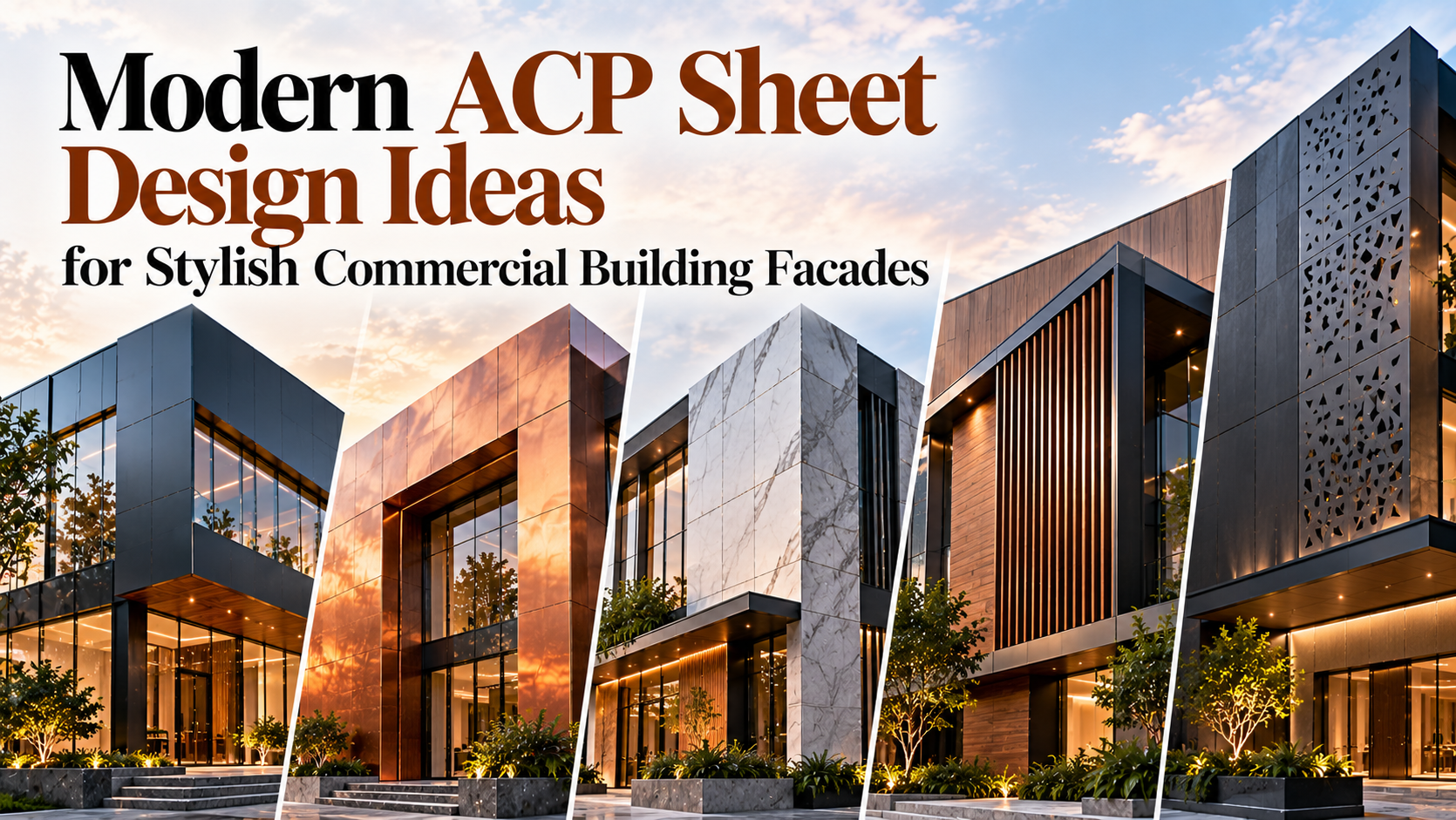
Modern commercial buildings are designed to make a strong first impression while providing durability, functionality, and long-term value. From corporate offices and shopping complexes to showrooms, hotels, and retail stores, the exterior facade plays an important role in defining a building’s identity. One material that has become popular in contemporary architecture is the Aluminium Composite Panel (ACP) sheet, thanks to its lightweight construction, versatile finishes, and modern appearance.
ACP sheets are available in a wide range of colours, textures, and finishes, including metallic silver, charcoal grey, wood-inspired patterns, stone textures, and glossy surfaces. These options allow architects and building owners to create distinctive commercial facades without relying exclusively on traditional materials such as stone, brick, or concrete.
Whether you are planning a new commercial building or renovating an existing property, choosing the right ACP sheet design can improve its visual appeal and support your architectural vision. In this guide, we explore 10 modern ACP sheet design ideas for stylish commercial building facades, along with practical tips for selecting suitable materials, colours, and finishes.
Why Choose ACP Sheets for Commercial Building Facades?
ACP sheets are composite panels typically made from two aluminium skins bonded to a central core. They are widely used in architectural cladding, signage, decorative features, and selected interior applications.
One of their biggest advantages is design flexibility. ACP panels can be incorporated into geometric patterns, contrasting colour schemes, curved elements, and contemporary facade layouts. They are also relatively lightweight compared with many traditional cladding materials, which can help simplify certain installation requirements when the supporting system is appropriately designed.
Other advantages include a broad selection of finishes, ease of surface cleaning, and the ability to coordinate facade panels with glass, aluminium profiles, and other building materials.
However, product quality and performance vary. For exterior commercial applications, buyers should evaluate coating durability, aluminium skin thickness, core composition, weather resistance, installation requirements, and applicable fire-safety standards before selecting a product.
1. Charcoal Grey ACP Sheets for a Premium Corporate Look
Design concept: Dark grey panels combined with glass and clean architectural lines.
Charcoal grey ACP sheets are an excellent option for commercial buildings that require a sophisticated and professional appearance. Their understated colour works particularly well with glass windows, black aluminium frames, and stainless-steel architectural elements.
This design is suitable for corporate offices, technology parks, commercial complexes, and modern business centres. A facade featuring charcoal grey panels with lighter grey or silver accents can create a sense of depth without making the exterior look overly complicated.
For a balanced design, use charcoal grey across the primary facade and introduce silver or white panels around entrances, balconies, or selected architectural sections. Proper lighting can further emphasise the building’s geometry after sunset.
2. Wooden ACP Sheets for a Warm and Contemporary Facade
Wooden-finish ACP sheets combine the visual warmth of timber with the appearance of a manufactured aluminium composite panel. They are especially useful for commercial buildings that want a welcoming atmosphere without using real wood across large exterior areas.
Popular shades include walnut brown, teak, oak, and darker timber-inspired finishes. These can be paired with white, beige, charcoal, or black panels to create a contemporary exterior.
Wooden ACP designs are particularly suitable for hotels, restaurants, cafes, office entrances, retail showrooms, and commercial buildings with landscape features.
For example, a building could use charcoal grey panels on its upper floors and a walnut-finish ACP feature around the main entrance. This combination creates visual contrast and helps distinguish the entrance from the rest of the facade.
Keep in mind that wooden ACP is still a manufactured cladding product, and its long-term appearance depends on coating quality, installation, and exposure conditions.
3. Metallic Silver ACP Sheets for a Futuristic Appearance
Metallic silver ACP sheets provide a sleek, modern appearance that complements glass and metal architectural components. Their reflective finish can create a sense of brightness and highlight the building’s overall geometry.
This design works well for commercial offices, automobile showrooms, electronics stores, exhibition centres, and contemporary retail buildings.
Metallic silver panels can be combined with dark grey or black accents to create a high-contrast exterior. Alternatively, pairing silver with white panels produces a lighter and more minimalist appearance.
When using metallic finishes, consider how daylight and artificial lighting affect the facade. Panel orientation, surface reflectivity, and the surrounding environment can influence the final appearance.
Choose an exterior-grade finish with suitable weathering performance, particularly for buildings exposed to strong sunlight, dust, and heavy rainfall.
4. White and Grey ACP Sheet Colour Combinations
White and grey ACP sheets are a timeless option for commercial facades because they provide a clean, balanced, and versatile appearance. This colour combination can suit everything from small office buildings to large commercial developments.
White panels help create a bright exterior, while grey sections add definition and visual depth. The colours can be arranged in horizontal bands, vertical sections, geometric blocks, or frames around glass windows.
For example, a commercial building can use white panels across the main facade, medium grey around the windows, and charcoal grey near the entrance. This approach creates a clear visual hierarchy without introducing too many colours.
White and grey designs are particularly effective for professional offices, educational buildings, clinics, and commercial complexes that require a contemporary yet understated architectural style.
5. Red and Black ACP Sheets for Retail Showrooms
For retail stores and commercial showrooms, a bold facade can help a business stand out from neighbouring properties. Red and black ACP sheets create a strong visual contrast and are suitable for brands seeking a distinctive exterior identity.
Red panels can highlight entrances, signage zones, and selected architectural elements, while black panels provide a strong background that balances the overall composition.
This combination is commonly considered for automobile showrooms, electronics retailers, branded stores, entertainment venues, and commercial outlets.
However, using red and black across every facade surface can make the building visually overwhelming. A better approach is to use one colour as the primary surface and reserve the other for accent sections.
When coordinating ACP panels with commercial signage, ensure that the panel layout, sign mounting system, and lighting are planned together.
6. Stone-Finish ACP Sheets for an Elegant Commercial Exterior
Stone-finish ACP sheets provide the appearance of natural stone while offering a lightweight cladding alternative. They can be used to introduce a refined, textured appearance into modern commercial architecture.
Common design inspirations include marble, granite, sandstone, and other natural surface patterns. These finishes can be paired with solid-colour panels to create a balance between texture and simplicity.
Stone-finish ACP is suitable for hotels, office entrances, premium retail buildings, commercial lobbies, and selected architectural feature walls.
For example, a commercial building may use a light stone-inspired finish around its entrance and charcoal panels across the upper facade. This creates a focal point without covering the entire exterior in a patterned surface.
The final appearance depends on print quality, coating performance, panel alignment, and joint detailing. Select a finish designed for the intended exposure conditions and verify its exterior suitability with the manufacturer.
7. Geometric ACP Sheet Designs for Modern Architecture
Geometric ACP sheet designs use contrasting colours, angular panel layouts, and carefully arranged sections to create a distinctive facade.
Instead of covering the building with one uniform colour, architects can introduce triangles, rectangular blocks, diagonal patterns, or asymmetrical arrangements. These designs can give commercial buildings a more dynamic appearance.
Geometric ACP facades are suitable for office complexes, shopping centres, educational institutions, entertainment venues, and contemporary business parks.
A design using white, silver, and charcoal panels can create a subtle geometric pattern, while stronger combinations such as red, black, and grey can produce a more dramatic effect.
Successful geometric designs require careful planning. Panel sizes, joints, fixing locations, and structural supports should be coordinated before fabrication begins. Overly complex patterns may increase material waste and installation costs, so the visual impact should be balanced against the available budget.
8. Copper and Bronze Metallic ACP Sheets for a Luxury Look
Copper and bronze ACP finishes are useful for commercial buildings that require a premium and distinctive architectural appearance. Their warm metallic tones can create an elegant contrast with glass, dark panels, stone-inspired finishes, and neutral colours.
These finishes are often considered for luxury hotels, premium showrooms, restaurants, commercial entrances, and high-end retail developments.
Copper-inspired panels can create a bold feature, while bronze tones tend to offer a more understated appearance. Both can be used as accent panels around entrances, vertical architectural fins, or selected facade sections.
For a sophisticated design, pair bronze ACP sheets with charcoal grey or black panels. Alternatively, combine copper finishes with beige or warm grey to create a softer colour palette.
Before purchasing, evaluate the finish’s resistance to fading, staining, and weather exposure. Metallic surfaces may show differences in appearance depending on viewing angle, panel orientation, and lighting.
9. Vertical and Horizontal ACP Panel Layouts
The direction of ACP panel arrangement can significantly influence the perceived proportions of a building.
Vertical ACP Designs
Vertical panel arrangements can emphasise height and make a commercial building appear taller. They are particularly useful for narrow facades, entrance towers, and buildings with strong vertical architectural lines.
Combining vertical charcoal panels with lighter accents can help create a structured, contemporary exterior.
Horizontal ACP Designs
Horizontal panel arrangements can make a facade appear wider and more balanced. They are useful for low-rise commercial buildings, long showroom facades, and buildings with broad window arrangements.
For example, horizontal bands of grey and white ACP can visually connect multiple floors and create a clean, organised appearance.
Both layouts require suitable joint positioning and support details. The panel arrangement should complement the building’s proportions rather than being selected only for visual trend appeal.
10. Mixed-Material ACP Facades with Glass and Aluminium Louvers
One of the most versatile approaches to modern commercial facade design is combining ACP sheets with glass, aluminium louvers, and other architectural materials.
ACP panels provide solid surfaces and colour contrast, glass introduces transparency, and aluminium louvers can add depth, screening, and external shading.
This combination is suitable for corporate offices, shopping centres, hotels, premium retail outlets, and contemporary commercial buildings.
For example, a commercial office could feature charcoal ACP panels around the main structure, large glazed windows, wooden-finish ACP near the entrance, and vertical aluminium louvers on sun-exposed elevations.
A mixed-material facade offers considerable design flexibility, but all components must be coordinated. Structural support, movement joints, water management, fire-safety provisions, and installation sequencing should be addressed during the design stage.
How to Choose the Best ACP Sheet Design for a Commercial Building
Selecting an attractive design is only one part of choosing the right facade material. The product must also meet the building’s performance requirements and suit its environment.
Consider the Building’s Purpose
Different commercial buildings have different design needs. A corporate office may benefit from a neutral and professional appearance, while a retail showroom may use stronger colours to reflect its brand identity.
Select Colours That Complement the Architecture
Choose ACP colours that work with the building’s windows, entrance, structural elements, signage, and surroundings. Limit the number of dominant colours unless a complex architectural design specifically requires more.
Evaluate the Surface Finish
Glossy, matte, metallic, wood-inspired, and stone-inspired finishes create different visual effects. Select a finish according to the desired appearance, maintenance expectations, and environmental exposure.
Check Panel Quality and Technical Specifications
Review the overall panel thickness, aluminium skin thickness, core material, coating specification, and warranty. Do not select exterior panels based solely on their colour or price.
Verify Fire-Safety Requirements
Commercial buildings may be subject to specific fire-performance requirements. Verify the applicable classification and supporting documentation for the exact product and proposed facade assembly.
Plan the Installation System
A good-looking facade depends on proper measurement, fabrication, joint design, fixing methods, and structural support. Use qualified professionals who can install the panels according to the approved design and manufacturer’s instructions.
Compare the Complete Project Cost
Consider the panel price, supporting framework, fabrication, installation, finishing details, maintenance, and replacement requirements. A slightly more expensive product may offer better long-term value if it meets the project’s performance requirements and has appropriate warranty support.
Common Mistakes to Avoid When Designing a Commercial ACP Facade
- Choosing colours without considering the building: A popular colour may not complement the architecture or surroundings.
- Using too many finishes: Excessive combinations can make a facade look visually crowded.
- Ignoring fire performance: Verify the relevant classification instead of relying on general marketing claims.
- Selecting products only by price: Low-cost panels may not provide the required coating quality or technical performance.
- Overlooking weather exposure: Sunlight, moisture, pollution, and coastal conditions can influence product selection.
- Ignoring joint alignment: Poorly planned joints can affect the overall appearance and long-term performance.
- Treating ACP as a structural material: ACP cladding generally needs an appropriately designed support system and should not be assumed to provide structural support.
- Neglecting maintenance access: Plan for safe cleaning and inspection, particularly on tall commercial buildings.
Conclusion
ACP sheets offer architects and commercial property owners considerable flexibility when designing modern building facades. From charcoal grey corporate exteriors and warm wooden finishes to metallic surfaces, geometric patterns, and mixed-material designs, the right combination can give a commercial building a distinctive and professional appearance.
The 10 design ideas in this guide demonstrate how ACP panels can support different architectural styles and business identities. However, the best design is not necessarily the most elaborate or expensive. It is the one that balances aesthetics, durability, installation requirements, maintenance, and technical compliance.
Before finalising your facade, compare suitable ACP finishes, review product specifications, and consult an experienced facade professional. With careful planning, you can create a commercial exterior that looks modern, supports your brand identity, and delivers long-term value.
Frequently Asked Questions (FAQs)
1. Which ACP sheet design is best for commercial buildings?
The best design depends on the building’s architecture and purpose. Charcoal grey, white and grey, metallic finishes, wooden ACP, and mixed-material facades are popular options for contemporary commercial buildings.
2. Which ACP sheet colours look premium for commercial facades?
Charcoal grey, metallic silver, bronze, copper, white, and wooden finishes can create a premium appearance. The right combination depends on the building’s proportions, lighting, surrounding materials, and brand identity.
3. Are ACP sheets suitable for commercial building exteriors?
Yes, suitable exterior-grade ACP panels are widely used for commercial cladding and decorative facade applications. Product specifications, installation details, weather resistance, and applicable fire-safety requirements must be checked before selection.
4. How much do ACP sheets cost for commercial building facades?
The total cost varies according to the panel grade, aluminium skin thickness, core composition, finish, fabrication, supporting framework, installation, and project complexity. Request a quotation based on the complete installed system rather than material price alone.
5. Are wooden-finish ACP sheets suitable for commercial buildings?
Wooden-finish ACP sheets can be suitable for exterior applications when the selected product is designed and specified for outdoor use. They provide a timber-inspired appearance, but the actual durability depends on coating quality, installation, and exposure conditions.
6. Which ACP sheet finish is best for a modern office building?
Charcoal grey, silver, white, and subtle metallic finishes are commonly considered for modern office buildings. Combining these with glass and carefully placed accent panels can create a professional appearance.
7. How long do ACP sheets last on commercial buildings?
The service life depends on product quality, coating performance, environmental exposure, installation, and maintenance. Review the manufacturer’s warranty and technical documentation rather than relying on a single lifespan estimate for all ACP panels.
8. Are ACP sheets weather-resistant?
Exterior-grade ACP panels with suitable coatings can resist normal outdoor weather exposure. Their performance depends on the product specification, installation system, joint detailing, and local conditions such as strong sunlight, humidity, pollution, or coastal exposure.
9. Are fire-retardant ACP sheets necessary for commercial buildings?
The required fire performance depends on local building regulations, building height, occupancy, and facade design. Verify the applicable requirements and the product’s supporting test or classification reports with a qualified professional.
10. Can ACP sheets be combined with glass and aluminium louvers?
Yes. ACP sheets can provide solid facade surfaces, glass can introduce transparency, and aluminium louvers can add shading and architectural depth. The complete design should coordinate structural supports, drainage, fire safety, and installation details.
11. What should I check before buying ACP sheets for a commercial facade?
Check the panel specification, aluminium skin thickness, core composition, coating, weather resistance, fire classification, warranty, installation system, and supplier documentation. Also consider maintenance access and the total installed cost.
12. Which ACP sheet design is best for a commercial showroom?
Wooden ACP, metallic silver, charcoal grey, and bold colour combinations can all work well for showrooms. Select the design based on the brand’s visual identity, the surrounding architecture, signage requirements, and the intended customer experience.