
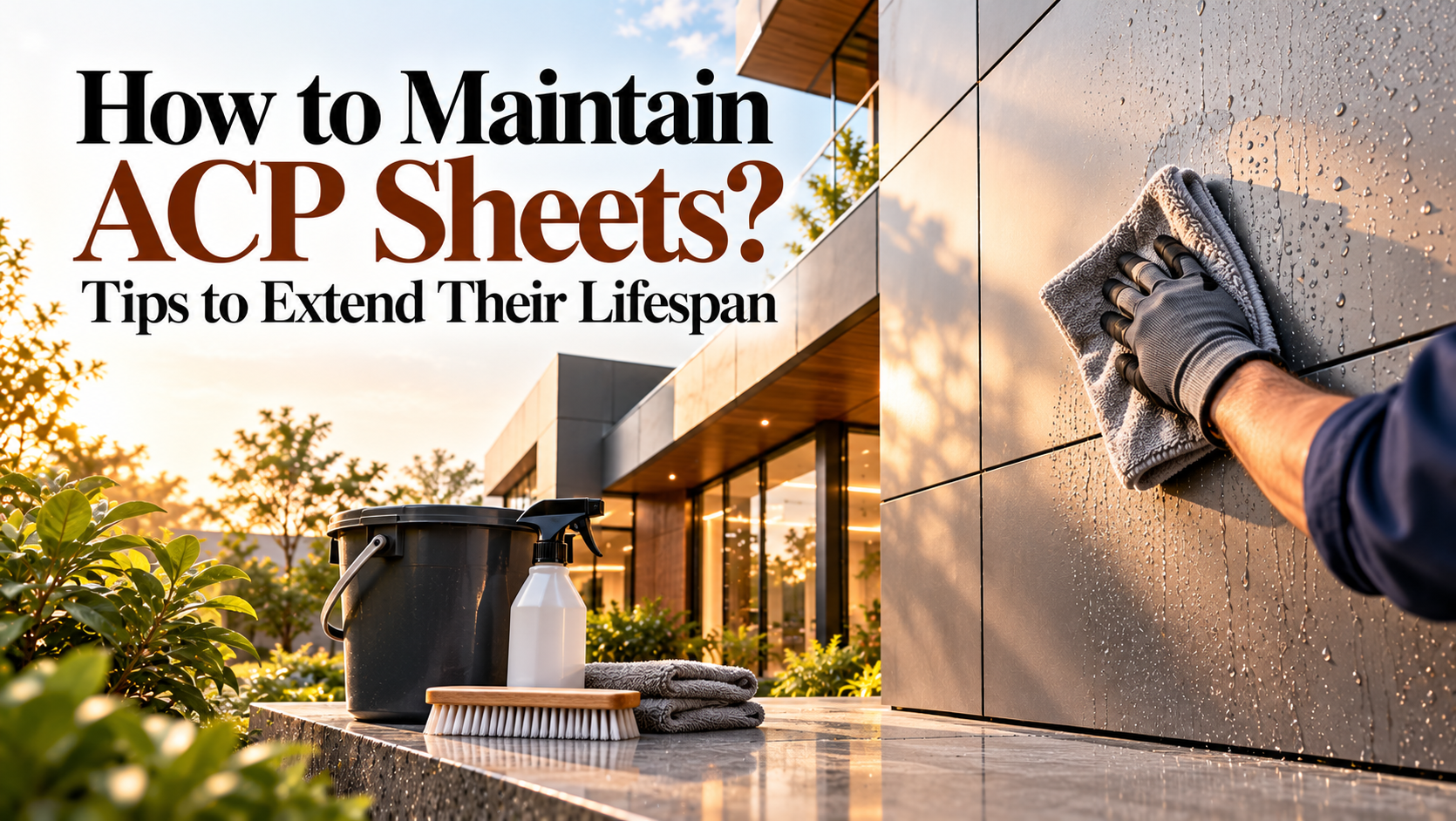
Aluminium Composite Panels (ACP sheets) have become a popular choice for modern building exteriors, commercial facades, shopfronts, signage, and interior decoration. Their lightweight construction, stylish appearance, and wide range of colours and finishes make them suitable for residential and commercial projects. However, like any building material, ACP sheets require proper care and maintenance to preserve their appearance and performance over time.
Exposure to sunlight, rain, dust, pollution, and changing temperatures can gradually affect the surface finish of ACP panels. Without regular cleaning and timely inspections, dirt accumulation, coating damage, loose fixings, and poorly maintained joints may reduce the overall appearance and reliability of the installation.
The good news is that maintaining ACP sheets does not have to be complicated. With the right cleaning methods, suitable products, and periodic inspections, you can help protect your investment and keep your building facade looking attractive.
In this guide, we explain 10 practical tips for maintaining ACP sheets, extending their service life, preventing common problems, and keeping your exterior panels in good condition.
Why Is ACP Sheet Maintenance Important?
ACP sheets consist of two aluminium skins bonded to a central core. Their performance depends on the panel specification, surface coating, core composition, fabrication quality, and installation system. While quality exterior-grade ACP panels are designed to withstand normal outdoor conditions, their surfaces and supporting components still require attention.
Regular maintenance offers several benefits:
- Preserves the appearance: Cleaning removes accumulated dust, pollution, stains, and other surface contaminants.
- Protects the coating: Appropriate cleaning methods help prevent avoidable scratches and surface damage.
- Identifies problems early: Inspections can reveal loose fixings, damaged sealants, or panel movement before issues become more serious.
- Supports long-term performance: Maintaining joints, supports, and drainage details helps protect the overall facade system.
- Reduces avoidable repair costs: Addressing minor issues promptly may prevent more extensive repairs later.
The maintenance requirements vary depending on the ACP finish, building location, environmental exposure, and manufacturer’s recommendations.
10 Tips to Maintain ACP Sheets and Extend Their Lifespan
1. Clean ACP Sheets Regularly
Regular cleaning is one of the simplest ways to maintain ACP panels. Dust, dirt, airborne pollutants, and rainwater deposits can gradually accumulate on exterior surfaces, making them appear dull or stained.
For routine cleaning, use clean water and a soft cloth, sponge, or non-abrasive cleaning equipment. If necessary, apply a mild detergent recommended for the specific panel coating.
Start by rinsing loose dirt from the surface, then gently clean the panels without applying excessive pressure. Rinse thoroughly to remove detergent residue and allow the surface to dry naturally.
The cleaning frequency depends on the building’s surroundings. Panels installed near busy roads, industrial areas, or dusty locations may need more frequent cleaning than those in cleaner environments.
Avoid allowing heavy deposits to accumulate for long periods, as stubborn contamination can become more difficult to remove.
2. Use the Right Cleaning Products
Not every cleaning product is suitable for ACP sheets. Strong chemicals, abrasive powders, and aggressive solvents may damage the protective coating, alter the colour, or leave permanent marks.
Before using any cleaning solution, check the panel manufacturer’s maintenance instructions. Use only products confirmed to be compatible with the specific surface finish.
Follow these precautions:
- Use mild, coating-compatible cleaning solutions.
- Avoid abrasive brushes, steel wool, and rough scouring pads.
- Do not use strong acids, alkalis, or unapproved solvents.
- Test an approved cleaner on a small, inconspicuous area first.
- Rinse the surface thoroughly after cleaning.
Different finishes, including metallic, glossy, matte, and wood-textured ACP sheets, may respond differently to cleaning products. Always follow the instructions for the finish installed on your building.
3. Avoid Scratching the Surface Coating
The coating on an ACP panel contributes to its appearance and resistance to environmental exposure. Scratches can make the facade look unattractive and may expose underlying material to further deterioration.
Use soft cleaning equipment and avoid scraping dirt from the surface with sharp objects. If adhesive residue, paint splashes, or other stubborn stains appear, consult the manufacturer’s recommended removal procedure instead of experimenting with household chemicals.
During construction or renovation work, protect existing ACP panels from tools, ladders, cement splashes, and falling debris.
If a panel is accidentally scratched, assess the depth and extent of the damage. Minor cosmetic marks may be treatable using an approved repair method, while deeper damage may require professional attention or panel replacement.
4. Inspect ACP Panels for Loose Fixings and Damage
Cleaning should be accompanied by periodic visual inspections. Even if the panel surface looks clean, the supporting framework, fasteners, joints, and edges may require attention.
Look for signs such as:
- Loose or displaced panels
- Visible gaps or unusual movement
- Damaged edges or corners
- Cracked or deteriorated sealants
- Corrosion around exposed fixings
- Unusual bulging or distortion
- Water staining around panel joints
These issues may result from installation defects, movement, weather exposure, impact, or deterioration of supporting components.
If you notice a loose panel, significant distortion, or potentially unsafe attachment, restrict access to the affected area and contact a qualified facade professional. Do not attempt repairs at height without appropriate equipment and training.
5. Maintain Joints and Sealants Properly
Panel joints are an important part of an ACP facade system. Depending on the installation design, joints and sealants help manage water penetration, accommodate movement, and maintain the intended appearance.
Over time, sealants may deteriorate due to sunlight, temperature changes, weather exposure, or incompatible materials.
Inspect accessible joints for cracking, separation, gaps, or signs of water ingress. If damage is identified, have the joint assessed and repaired using compatible materials and the correct installation procedure.
Avoid applying a new layer of sealant over a failed joint without understanding the underlying cause. In some cases, the old material must be removed and the joint prepared correctly before resealing.
Proper joint maintenance is particularly important for exterior facades exposed to heavy rain and changing temperatures.
6. Remove Stains Before They Become Stubborn
Bird droppings, tree sap, oil deposits, hard-water marks, and construction residue can affect the appearance of ACP sheets.
Where permitted by the manufacturer’s instructions, remove fresh contamination promptly using water and a soft cloth. Work gently and avoid rubbing abrasive particles into the coating.
For difficult stains, use an approved cleaner and follow the recommended dilution, application time, and rinsing procedure.
Do not use sharp blades, aggressive polishing compounds, or untested stain removers. These methods may remove or damage the coating and make the affected area more noticeable.
If a stain does not respond to safe cleaning, seek advice from the panel manufacturer or a qualified maintenance specialist.
7. Check Drainage and Prevent Water Accumulation
Proper drainage helps protect the complete facade system. Although exterior-grade ACP panels may be designed for outdoor exposure, water management also depends on joints, flashings, sealants, cavities, and the supporting structure.
Inspect accessible areas for blocked drainage openings, accumulated debris, damaged flashing, or water collecting around panel edges.
After heavy rainfall, look for unusual water marks or signs of leakage near windows, joints, and adjoining building components. Persistent moisture may indicate a problem with the facade detailing rather than the panel surface itself.
Keep drainage paths clear according to the installation design. Do not block ventilation openings or drainage channels with sealant, debris, or improvised repairs.
If water repeatedly enters the building, arrange a professional inspection to identify and correct the source.
8. Protect ACP Sheets from Harsh Chemicals and Construction Residue
Cement, mortar, paint, plaster, and industrial deposits can be particularly difficult to remove once they harden on the surface.
During construction, renovation, or painting work, cover nearby ACP panels with suitable protective materials. Ensure the covering itself does not scratch the coating or trap moisture against the surface for an extended period.
If construction residue reaches the panels, follow the manufacturer’s recommended cleaning method. Avoid removing hardened cement or paint by force, because scraping can cause permanent damage.
Buildings near industrial facilities may also experience deposits from airborne pollutants. In these locations, a suitable inspection and cleaning schedule can help prevent excessive contamination.
9. Choose Appropriate Maintenance for the Local Climate
The surrounding environment affects how frequently ACP sheets need maintenance.
In hot and sunny locations, ultraviolet exposure may gradually affect coating appearance, depending on the finish and product quality. In coastal areas, salt deposits and moisture can increase corrosion risks for exposed metal components and incompatible fixings. In dusty or industrial environments, surfaces may require more frequent cleaning.
Consider the following maintenance priorities:
- Hot climates: Inspect for coating deterioration, discolouration, and signs of excessive heat exposure.
- Coastal environments: Remove salt deposits appropriately and inspect exposed fixings and supports for corrosion.
- Heavy rainfall areas: Check joints, flashing, drainage, and signs of water ingress.
- Dusty locations: Clean panels regularly using non-abrasive methods.
- Industrial areas: Inspect for chemical deposits and follow suitable cleaning recommendations.
Selecting an exterior-grade product designed for the intended environment is just as important as maintaining it after installation.
10. Schedule Professional Inspections and Follow Manufacturer Guidelines
Regular cleaning can help preserve the panel surface, but it cannot replace technical inspections of the complete facade system.
A qualified professional can assess the condition of panel attachments, supporting frameworks, sealants, drainage details, and areas that are difficult to access safely.
The inspection frequency should reflect the building’s height, age, exposure, installation system, and maintenance history. High-rise commercial buildings and facades exposed to severe weather may need a more structured inspection programme.
Always follow the manufacturer’s guidance for cleaning, repairs, replacement parts, and warranty requirements. Keep records of inspections and repairs so that recurring issues can be identified.
Do not drill, cut, repaint, or modify installed panels without confirming that the proposed work is compatible with the system and will not compromise safety or warranty conditions.
Common ACP Sheet Maintenance Mistakes to Avoid
Even with good intentions, incorrect maintenance practices can damage ACP panels. Avoid these common mistakes:
Using abrasive cleaning tools: Rough brushes and scouring pads can scratch the coating.
Applying strong chemicals: Unapproved solvents and acidic or alkaline cleaners may cause discolouration or coating damage.
Ignoring small defects: Loose fixings, cracked sealants, and damaged edges may indicate issues that need timely attention.
Using excessive water pressure: High-pressure cleaning may damage vulnerable joints, seals, or adjacent components if the system is not designed for it.
Leaving construction residue untreated: Cement, paint, and other deposits can become increasingly difficult to remove.
Neglecting drainage: Blocked drainage paths and persistent water accumulation can affect the performance of the complete facade system.
Attempting unsafe repairs: Working at height or repairing loose facade panels without appropriate training and equipment can cause serious injury.
Following the manufacturer’s maintenance instructions and using qualified professionals for technical repairs can help avoid these problems.
How Often Should ACP Sheets Be Maintained?
There is no single maintenance schedule that suits every ACP installation. The correct frequency depends on the environment, panel finish, building location, and manufacturer’s recommendations.
A practical maintenance plan may include:
| Maintenance Activity | Suggested Frequency |
| Visual check for dirt and obvious damage | Periodically throughout the year |
| Routine surface cleaning | As needed, based on dirt accumulation |
| Inspection of joints and sealants | At regular intervals and after notable damage or severe weather |
| Inspection of fixings and supporting components | According to the facade maintenance plan |
| Drainage and water-ingress checks | Periodically, especially after heavy rainfall |
| Professional facade inspection | According to the building’s risk, age, exposure, and manufacturer guidance |
These are general planning suggestions, not fixed technical requirements. Follow the product manufacturer’s instructions and any applicable building maintenance requirements.
Conclusion
Maintaining ACP sheets is essential for preserving the appearance and performance of modern building facades. Regular cleaning, compatible cleaning products, careful stain removal, joint inspections, proper drainage, and timely repairs can help prevent avoidable damage.
However, the long-term performance of ACP panels depends on more than surface cleaning. Panel quality, coating specifications, core composition, installation details, environmental exposure, and the condition of the supporting system all play important roles.
By following these 10 maintenance tips and arranging professional inspections when needed, property owners can keep their ACP facades in better condition and address problems before they become more extensive.
Whether you have ACP sheets installed on a residential exterior, commercial building, showroom, or office facade, a consistent maintenance plan is a practical way to protect your investment.
Frequently Asked Questions (FAQs)
1. How do you maintain ACP sheets?
Clean ACP sheets with water, a soft cloth or sponge, and a compatible mild detergent when needed. Avoid abrasive tools and unapproved chemicals, inspect joints and fixings periodically, and follow the manufacturer’s maintenance instructions.
2. How often should ACP sheets be cleaned?
Cleaning frequency depends on the building’s environment and the amount of dirt accumulation. Buildings near busy roads, industrial areas, or coastal locations may require more frequent cleaning than those in less exposed areas.
3. Which cleaning solution is best for ACP sheets?
A mild detergent approved for the panel’s coating is generally suitable for routine cleaning. Check the manufacturer’s instructions before using any chemical, and test the approved product on a small, inconspicuous area first.
4. Can I use a pressure washer to clean ACP panels?
Only if the manufacturer permits it and the equipment can be operated within the specified pressure and distance limits. Excessive pressure may damage joints, sealants, coatings, or adjacent facade components.
5. How can I prevent ACP sheets from fading?
Select panels with coatings suitable for the intended outdoor exposure, clean them using approved methods, and inspect them periodically for coating deterioration. Fading resistance depends on the coating, product quality, sunlight exposure, and environmental conditions.
6. What should I do if my ACP sheet develops scratches?
Assess the depth of the scratch and consult the manufacturer’s repair recommendations. Minor cosmetic damage may be treatable with an approved method, while deeper damage may require professional repair or panel replacement.
7. Are ACP sheets waterproof?
ACP panels are not a substitute for a properly designed waterproof facade system. Resistance to water penetration depends on the panel specification, joints, sealants, flashing, drainage, and installation details.
8. How do I maintain ACP sheets in coastal areas?
Use panels and compatible fixing components suitable for coastal exposure. Remove salt deposits with an approved cleaning method and inspect accessible joints, fasteners, and supports for signs of corrosion.
9. Can damaged ACP sheets be repaired without replacing them?
Some minor surface defects or joint problems may be repairable. However, panels with significant distortion, deep damage, compromised attachments, or other structural concerns may require replacement or specialist intervention.
10. Do ACP sheets require professional maintenance?
Routine cleaning may be manageable when the panels are safely accessible. Professional maintenance is advisable for facade inspections, repairs at height, loose panels, persistent water ingress, damaged supports, and other technical or safety-related problems.
11. What is the biggest mistake to avoid when cleaning ACP sheets?
Using abrasive tools or unapproved chemicals is a major mistake because these can damage the surface coating. Always follow the panel manufacturer’s cleaning instructions and use compatible materials.
12. How can I extend the lifespan of ACP sheets?
Choose suitable exterior-grade panels, ensure professional installation, clean them correctly, maintain joints and drainage, inspect fixings, and repair defects promptly. The achievable service life depends on the product specification, installation quality, environment, and ongoing maintenance.