
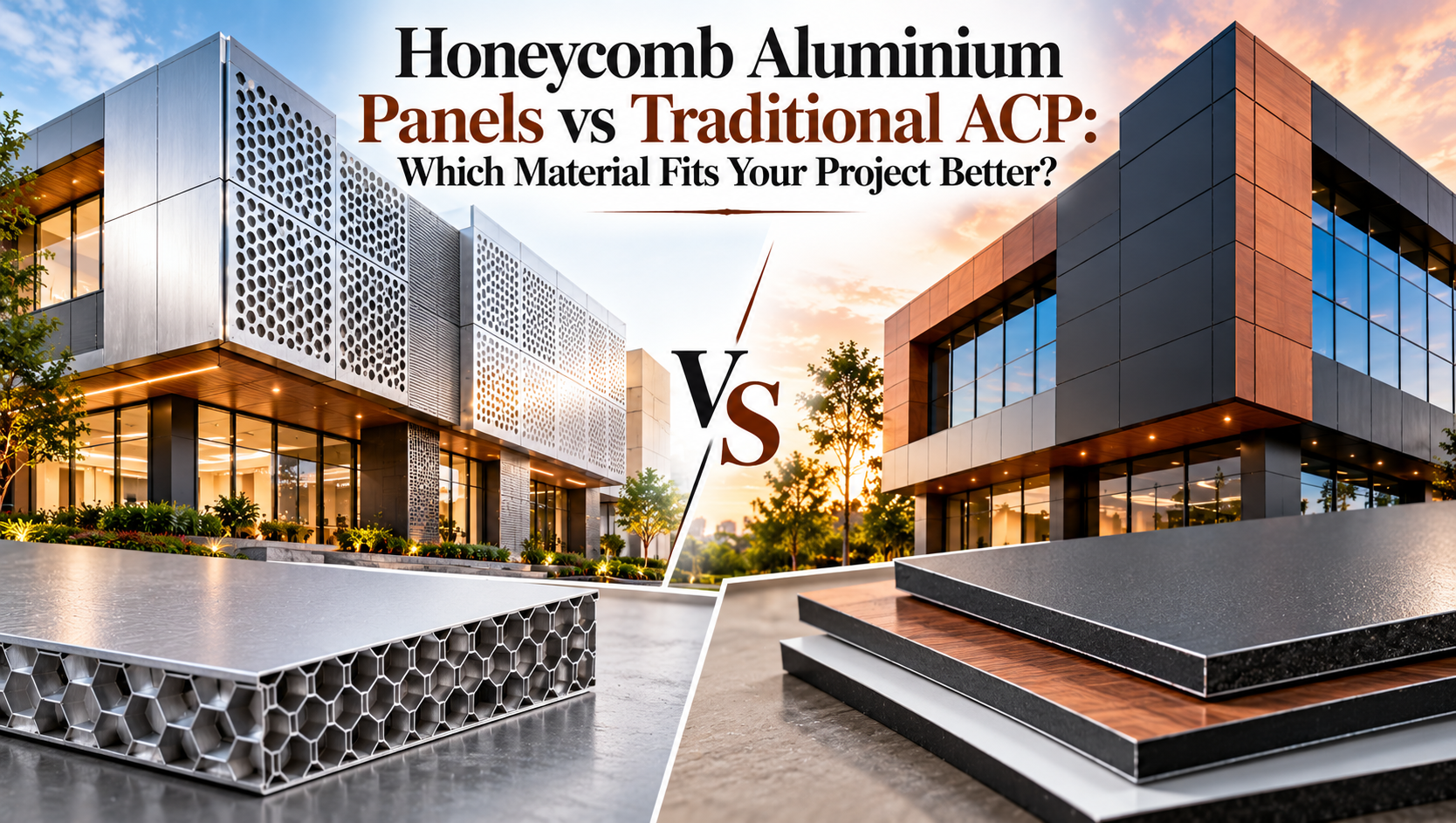
Modern architecture demands materials that are not only visually appealing but also durable, lightweight, fire-safe, and performance-driven. Among the most popular façade and cladding materials used today are Honeycomb Aluminium Panels and Traditional ACP (Aluminium Composite Panels).
Both materials are widely used in commercial buildings, airports, shopping malls, offices, residential projects, hospitals, and modern infrastructure. However, each material offers different advantages depending on the project’s requirements, budget, design goals, and structural needs.
Architects and builders often face one common question:
Which material is better — Honeycomb Aluminium Panels or Traditional ACP?
In this guide, we’ll compare both materials in detail, including their structure, strength, weight, fire safety, durability, applications, cost, and overall performance to help you choose the right option for your project.
What Are Honeycomb Aluminium Panels?
Honeycomb Aluminium Panels are advanced lightweight panels made using two aluminium sheets bonded to an aluminium honeycomb core structure.
The internal honeycomb core resembles a bee honeycomb pattern, which provides exceptional strength while keeping the panel lightweight.
These panels are known for:
- High structural rigidity
- Excellent flatness
- Lightweight performance
- Fire resistance
- Premium architectural appearance
Honeycomb panels are commonly used in:
- Airports
- Metro stations
- High-rise façades
- Luxury interiors
- Cleanrooms
- Industrial applications
- Commercial architecture
What Are Traditional ACP Sheets?
Traditional ACP (Aluminium Composite Panels) are made using two aluminium layers bonded to a non-aluminium core material, usually polyethylene or fire-retardant mineral-filled core.
ACP sheets are widely popular because they offer:
- Design flexibility
- Lightweight construction
- Easy fabrication
- Cost efficiency
- Multiple surface finishes
ACP sheets are commonly used in:
- Exterior cladding
- Elevation designs
- Signage
- False ceilings
- Interior wall panels
- Retail showrooms
- Commercial façades
Modern ACP sheets are available in:
- Wooden finishes
- Metallic textures
- Matte colours
- Stone textures
- Glossy surfaces
Structural Difference Between Honeycomb Panels and ACP
The main difference lies in the internal core structure.
Honeycomb Aluminium Panels
- Aluminium skin + aluminium honeycomb core
- Entirely metallic internal structure
- High load-bearing strength
Traditional ACP Sheets
- Aluminium skin + polyethylene/mineral core
- Lightweight composite construction
- Flexible and easy to fabricate
Honeycomb panels are generally more rigid, while ACP sheets offer more flexibility and easier customization.
Which Material Is Stronger?
When it comes to structural strength, Honeycomb Aluminium Panels have an advantage.
The honeycomb core structure distributes load evenly, providing:
- Better rigidity
- Higher strength-to-weight ratio
- Improved flatness
- Greater impact resistance
This makes honeycomb panels suitable for:
- Large-span applications
- High-wind zones
- Heavy-duty architectural projects
Traditional ACP sheets are also durable but are comparatively more flexible and lightweight.
For standard commercial façades and decorative applications, ACP remains highly effective.
Weight Comparison
Both materials are lightweight compared to stone or solid metal cladding.
However:
- ACP sheets are lighter overall
- Honeycomb panels are slightly heavier but structurally stronger
ACP panels are easier to:
- Transport
- Cut
- Fabricate
- Install
This is one reason why ACP is widely used in fast-track commercial projects.
Fire Safety Comparison
Fire safety is now one of the most important considerations in modern architecture.
Honeycomb Aluminium Panels
Because they use an aluminium core structure, honeycomb panels generally offer:
- Better fire resistance
- Low combustibility
- Improved safety performance
Traditional ACP Sheets
Standard ACP sheets may use polyethylene cores, while modern FR ACP sheets use:
- B1 grade cores
- A2 grade mineral cores
Fire-retardant ACP sheets significantly improve fire safety and are widely used in commercial projects.
For high-risk infrastructure projects, architects often choose:
- A2 FR ACP
- Aluminium honeycomb panels
Durability and Weather Resistance
Both materials offer excellent durability when manufactured using high-quality coatings.
Honeycomb Aluminium Panels
Offer:
- High structural stability
- Better flatness over time
- Excellent corrosion resistance
- Strong weather durability
ACP Sheets
Provide:
- UV resistance
- Moisture protection
- Corrosion resistance
- Flexible weather performance
Premium ACP panels with PVDF coatings perform exceptionally well in outdoor conditions.
Design Flexibility
This is where ACP sheets often outperform honeycomb panels.
ACP sheets can be:
- Bent
- Folded
- Curved
- Routed
- Perforated
- Customized into complex designs
Architects prefer ACP for:
- Creative façade designs
- Curved elevations
- Modern storefronts
- Decorative exteriors
Honeycomb panels are more rigid and better suited for flat premium surfaces rather than highly flexible fabrication.
Surface Finish Options
ACP Sheets
Available in:
- Wooden textures
- Stone finishes
- Metallic colours
- Mirror finishes
- Matte coatings
- Glossy finishes
Honeycomb Panels
Usually available in:
- Metallic finishes
- Industrial textures
- Premium matte surfaces
ACP offers more decorative versatility for modern architectural styling.
Installation Comparison
ACP Panels
ACP sheets are easier and faster to install because they are:
- Lightweight
- Flexible
- Easy to fabricate onsite
This reduces:
- Labour costs
- Installation time
- Structural load
Honeycomb Panels
Require:
- More precise installation
- Advanced support systems
- Specialized fabrication
This can increase project complexity and installation costs.
Cost Comparison
Cost plays a major role in material selection.
Honeycomb Aluminium Panels
Generally:
- More expensive
- Premium architectural product
- Used in specialized applications
Traditional ACP Sheets
More:
- Budget-friendly
- Economical for large projects
- Cost-effective for commercial façades
For projects with budget limitations, ACP sheets are often the more practical solution.
Best Applications for Honeycomb Aluminium Panels
Honeycomb panels are ideal for:
- Airports
- Metro stations
- Luxury commercial projects
- High-rise towers
- Industrial cleanrooms
- Large architectural surfaces
- Premium infrastructure
These projects benefit from high rigidity and structural performance.
Best Applications for ACP Sheets
ACP sheets are ideal for:
- Commercial façades
- Residential elevations
- Retail stores
- Signage
- False ceilings
- Office interiors
- Petrol pumps
- Shopping malls
- Hospitality projects
ACP is preferred where flexibility, aesthetics, and cost-efficiency are priorities.
Sustainability Comparison
Both materials support sustainable construction.
Honeycomb Panels
- Highly recyclable
- Long-lasting
- Strong metallic structure
ACP Panels
Modern ACP manufacturers now offer:
- Recyclable aluminium
- Eco-friendly coatings
- Sustainable manufacturing systems
ACP also reduces structural load, improving construction efficiency.
Which Material Is Better for Modern Architecture?
The answer depends on your project requirements.
Choose Honeycomb Aluminium Panels If You Need:
- High structural rigidity
- Large flat surfaces
- Premium infrastructure-grade materials
- Advanced fire safety
- Industrial or aviation applications
Choose Traditional ACP Sheets If You Need:
- Design flexibility
- Faster installation
- Cost-effective cladding
- Decorative finishes
- Lightweight façades
- Modern architectural creativity
For many commercial and residential projects, ACP sheets provide the ideal balance of:
- Aesthetics
- Durability
- Cost efficiency
- Ease of installation
Why ACP Continues to Dominate Facade Design
Despite the rise of advanced cladding materials, ACP remains one of the most widely used façade solutions because it combines:
- Modern aesthetics
- Lightweight performance
- Easy fabrication
- Versatile finishes
- Budget-friendly installation
- Strong durability
Manufacturers like Pioneer Panels continue to push innovation in ACP technology with advanced coatings, fire-retardant cores, premium textures, and durable façade solutions designed for modern architecture.
Conclusion
Both Honeycomb Aluminium Panels and Traditional ACP sheets offer unique advantages for modern construction and façade design.
Honeycomb panels are ideal for projects requiring:
- Maximum rigidity
- High structural performance
- Premium engineering applications
Traditional ACP sheets are better suited for:
- Flexible façade design
- Commercial projects
- Decorative architecture
- Budget-conscious developments
Choosing the right material depends on:
- Project type
- Budget
- Design goals
- Structural requirements
- Fire safety expectations
Understanding these differences helps architects and builders make smarter façade decisions for long-term performance and modern aesthetics.
FAQs
1. What is the difference between honeycomb panels and ACP sheets?
Honeycomb panels use an aluminium honeycomb core for higher rigidity, while ACP sheets use a composite core for flexibility and lightweight performance.
2. Which is stronger: honeycomb panels or ACP?
Honeycomb aluminium panels are structurally stronger and more rigid than traditional ACP sheets.
3. Are ACP sheets more affordable than honeycomb panels?
Yes, ACP sheets are generally more budget-friendly and cost-effective for commercial and decorative applications.
4. Which material is better for exterior façades?
Both materials work well for façades, but ACP sheets offer greater design flexibility and easier installation.
5. Are honeycomb aluminium panels fire resistant?
Yes, honeycomb aluminium panels provide excellent fire resistance because of their metallic core structure.