
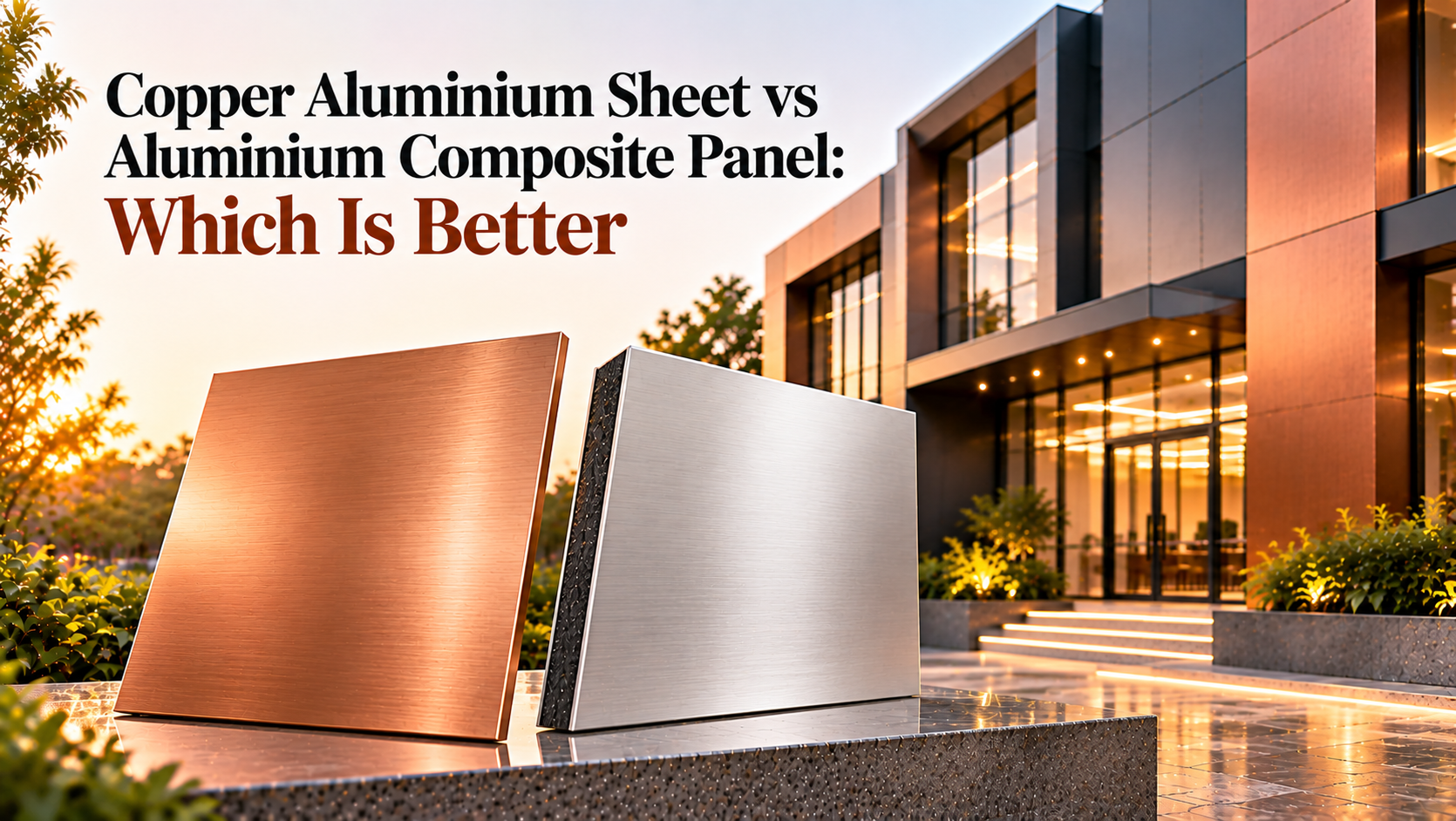
Choosing the right cladding material can significantly influence a building’s appearance, maintenance requirements and overall project cost. Architects and builders often consider different aluminium-based materials to achieve modern exterior designs while balancing aesthetics and practical performance.
Copper Aluminium Sheets and Aluminium Composite Panels (ACP) are two options used in architectural and decorative applications. Both can offer attractive surfaces for building façades, interior walls and commercial spaces, but their construction, appearance, finish options and cost considerations can differ.
While copper aluminium panels bring a distinctive copper-inspired appearance, conventional ACP sheets offer a broader selection of colours, textures and decorative finishes.
In this guide, we compare Copper Aluminium Sheets and Aluminium Composite Panels across seven important factors to help you understand which material may be suitable for your project.
What Is a Copper Aluminium Sheet?
In architectural cladding, the term Copper Aluminium Sheet can refer to a composite panel that combines a copper-facing surface with an aluminium backing or supporting layer. The exact construction varies by manufacturer.
Some products use copper as the visible exterior layer to achieve the appearance of natural copper, while the aluminium component contributes to the panel’s overall construction.
Copper-based architectural panels can develop distinctive surface characteristics over time, depending on the copper composition, protective coating and environmental exposure.
Important: Copper aluminium cladding should not be confused with copper-aluminium bimetal sheets used in electrical connections or industrial applications. Always check the product’s construction and technical specifications before purchasing.
What Is an Aluminium Composite Panel?
An Aluminium Composite Panel is a flat composite panel made by bonding two aluminium sheets to a central core. The core may contain polyethylene or mineral-based materials, depending on the product specification.
ACP sheets are widely used in architectural cladding, commercial building façades, shop fronts, signage and interior decoration.
They are available in different surface finishes, including solid colours, metallic appearances, wood-inspired textures and stone-inspired designs.
Pioneer Panels offers metal composite panel solutions across different finish collections, including Wood, Metal, Earth, Colours and Innovation.
Copper Aluminium Sheet vs Aluminium Composite Panel: 7 Key Differences
1. Material Composition and Construction
The first major difference between these materials is their construction.
Architectural copper aluminium sheets may use a copper-facing layer combined with an aluminium backing or composite structure. The exact layer arrangement, thickness and bonding process depend on the manufacturer.
Conventional ACP consists of two aluminium skins bonded to a central core. This layered construction creates a lightweight panel suitable for different architectural applications.
The actual construction should always be confirmed through the manufacturer’s technical documentation.
Key difference: Copper aluminium cladding uses copper as a visible material layer in certain product constructions, whereas conventional ACP uses aluminium as its outer surface material.
2. Appearance and Surface Finish
Appearance is one of the main reasons architects consider copper-based cladding.
Copper aluminium panels can provide a distinctive metallic appearance with warm reddish-brown, bronze or aged copper-inspired tones. Depending on the product, the surface may develop a natural patina or retain its original finish through a protective coating.
Conventional ACP offers a wider range of decorative possibilities. Available finishes may include:
- Solid colours
- Metallic colours
- Wooden textures
- Stone-inspired finishes
- Sand and rustic textures
- Special decorative surfaces
Key difference: Copper aluminium panels are generally selected for their distinctive copper appearance, while ACP offers a broader variety of architectural surface finishes.
3. Weight and Handling
Weight is an important consideration for building façades, particularly when large panels are required.
The weight of a copper aluminium sheet depends on the thickness and proportion of copper and aluminium used in its construction.
ACP panels generally have a lightweight sandwich structure because their central core reduces the amount of aluminium needed compared with a solid metal sheet of equivalent overall thickness.
However, the actual weight comparison depends on the complete construction of both products, including their core, backing and metal-layer thicknesses.
Key difference: ACP is designed as a lightweight composite panel, while copper aluminium panel weight depends on its specific metal-layer construction.
4. Durability and Weather Resistance
Both materials can be used in architectural applications, provided they are specified correctly for the intended environment.
Copper-based exterior surfaces can develop a patina over time when exposed to atmospheric conditions. This natural change may be desirable in certain architectural designs, but the appearance and rate of change depend on environmental exposure and surface treatment.
ACP durability depends on its aluminium skin, core, protective coating, installation quality and environmental conditions.
For exterior applications, factors such as UV exposure, humidity, rain, pollution and temperature variations should be considered.
Key difference: Copper surfaces may undergo natural colour changes over time, whereas ACP appearance and weathering behaviour depend significantly on its coating and panel specifications.
5. Design Flexibility and Architectural Applications
Copper aluminium panels are often selected for projects where designers want a distinctive metallic appearance. Their visual character can complement contemporary commercial buildings, premium hospitality spaces and architectural feature areas.
ACP sheets offer greater flexibility in terms of available decorative finishes and colour combinations.
They can be used for:
- Building façades
- Commercial shop fronts
- Interior feature walls
- Reception areas
- Signage backgrounds
- Canopies and architectural details
Key difference: Copper aluminium panels are suitable for copper-focused architectural designs, while ACP provides more flexibility for projects requiring different colours, textures and finishes.
6. Fabrication and Installation
Fabrication requirements depend on the material’s construction and intended application.
Copper aluminium panels may require specific cutting, folding, forming and fixing methods to protect the copper-facing layer and maintain the integrity of the bonded structure.
ACP panels can be cut, routed, folded and fabricated into different shapes using suitable tools and installation systems.
Both materials require proper supporting frameworks, fixing arrangements, joint detailing and allowance for thermal movement.
For exterior cladding, professional installation is important to ensure the panels perform as intended.
Key difference: Both materials can be fabricated for architectural applications, but their fabrication methods and handling requirements depend on the specific product construction.
7. Cost and Long-Term Maintenance
The cost of a cladding material depends on more than its sheet price. Product construction, metal thickness, finish, fabrication, installation and maintenance all contribute to the overall project budget.
Copper aluminium panels may involve higher material costs depending on copper content, surface treatment and manufacturing process.
Conventional ACP may be a more economical option for projects that require large decorative surfaces in different colours and finishes. However, the actual price depends on the selected panel grade and specification.
Maintenance also varies. Copper surfaces may require specific cleaning or treatment depending on whether a natural patina is desired. ACP panels should be cleaned according to the manufacturer’s recommendations to protect their coating.
Key difference: Copper aluminium panels are often selected for their distinctive copper appearance, while ACP can provide a wider range of decorative options at different project budgets.
Comparison Table: Copper Aluminium Sheet vs Aluminium Composite Panel
| Comparison factor | Copper Aluminium Sheet | Aluminium Composite Panel |
| Construction | Varies by copper and aluminium layer arrangement | Two aluminium skins with a central core |
| Appearance | Distinctive copper or copper-inspired metallic finish | Wide range of colours and textures |
| Weight | Depends on metal-layer thickness and composition | Generally lightweight composite construction |
| Surface behaviour | May develop patina depending on product and exposure | Depends on coating and surface finish |
| Design options | Primarily copper-based architectural appearance | Wood, metal, stone, solid colours and other finishes |
| Fabrication | Depends on copper layer and panel construction | Cutting, routing, folding and fabrication |
| Cost | Depends on copper content and manufacturing | Depends on core, skin thickness, coating and grade |
| Maintenance | Depends on copper finish and desired appearance | Depends on coating and environmental exposure |
Where Are Copper Aluminium Sheets Commonly Used?
Architectural copper aluminium panels are generally selected for projects where the appearance of copper is an important part of the design.
Common applications may include:
- Building facades: Creating distinctive metallic exterior surfaces.
- Commercial buildings: Adding copper-inspired architectural elements to offices and retail spaces.
- Luxury hotels: Creating feature walls and decorative entrance sections.
- Interior feature walls: Adding warm metallic surfaces to reception areas and premium interiors.
- Architectural highlights: Highlighting entrance frames, columns and selected façade sections.
The suitability of a specific copper aluminium product depends on its construction, weathering characteristics and installation requirements.
Where Are Aluminium Composite Panels Commonly Used?
ACP sheets are used in several residential, commercial and architectural applications.
Some common uses include:
- Exterior building cladding
- Retail shop fronts
- Commercial signage
- Interior feature walls
- Office reception areas
- Canopies and soffits
- Decorative column cladding
- Showroom interiors
- Lift lobby walls
- Exhibition displays and kiosks
Their different surface finishes make them suitable for projects that require a coordinated architectural appearance.
Which Is Better: Copper Aluminium Sheet or Aluminium Composite Panel?
There is no single answer because the better material depends on the project’s design and technical requirements.
Choose Copper Aluminium Sheets when:
- You want a distinctive copper-based architectural appearance.
- Your design requires warm metallic or aged copper-inspired surfaces.
- Copper is an important part of the building’s visual identity.
- Your project specifications support the selected copper aluminium construction.
Choose Aluminium Composite Panels when:
- You need a wider selection of colours and textures.
- You want a lightweight composite cladding option.
- Your project involves large decorative façade areas.
- You need finishes such as wood, metallic, stone-inspired or solid colours.
- You want to coordinate exterior and interior surfaces using different panel finishes.
For either material, check the product’s technical specifications, fire performance, environmental suitability and installation requirements before making a final decision.
Frequently Asked Questions
1. What is the main difference between Copper Aluminium Sheets and ACP?
Copper aluminium sheets used in architecture feature a copper-based visible surface combined with an aluminium component, depending on the product construction. ACP consists of two aluminium skins bonded to a central core.
2. Is Copper Aluminium Sheet the same as Copper Composite Panel?
The terms may be used for related architectural products, but they do not automatically describe identical constructions. Some products use copper as the facing layer with an aluminium backing or composite structure. Always check the manufacturer’s product specifications.
3. Is Copper Aluminium Sheet more expensive than ACP?
Copper aluminium panels may cost more because of their copper content and specialised manufacturing. However, the actual price depends on the construction, thickness, finish, quantity and installation requirements.
4. Can Copper Aluminium Sheets be used for exterior cladding?
Certain copper aluminium products are designed for exterior architectural applications. Their weather resistance, protective finish, fixing system and technical specifications should be checked before installation.
5. Do copper aluminium panels change colour over time?
Some copper surfaces develop a natural patina when exposed to atmospheric conditions. The rate and appearance of this change depend on the copper composition, protective coating and surrounding environment.
6. Are Aluminium Composite Panels suitable for building facades?
Yes. ACP products specifically designed and tested for exterior cladding can be used for building façades. The panel core, fire classification, coating and complete installation system must meet the applicable building requirements.
7. Which material offers more design options?
ACP generally offers more ready-made decorative choices, including wooden, metallic, stone-inspired and solid-colour finishes. Copper aluminium panels are more focused on copper-based metallic aesthetics.
8. Can ACP and copper aluminium panels be combined in one building design?
Yes, different cladding materials can be combined in an architectural design. However, designers should consider differences in thermal movement, weight, fixing systems, corrosion compatibility and weatherproofing at the junctions.
Explore Architectural Metal Finishes with Pioneer Panels
Choosing between Copper Aluminium Sheets and Aluminium Composite Panels depends on the appearance, construction requirements and performance expectations of your project.
Copper aluminium cladding can create a distinctive architectural statement with its warm metallic character. ACP, on the other hand, offers a wider selection of decorative finishes for contemporary commercial and residential designs.
Pioneer Panels offers metal composite panel solutions across different finish collections, including:
- Wood: Natural Timber, Timber Rustic, Timber Textured and Timber Hues.
- Metal: Neo, Magma Metal and Metaltek.
- Colours: Glossy, Solid Colour and Metallic Colour.
- Earth: Natural Surfaces, Natural Stone, Sand, Rustic and Suede.
- Innovation: Opulent, Galaxy, Pure, Aurora Hues, Verve and Vogue.
These collections provide different surface-finish possibilities for architectural and decorative applications. Explore the available Pioneer Panels finishes to find an ACP solution that complements your building’s design requirements.