
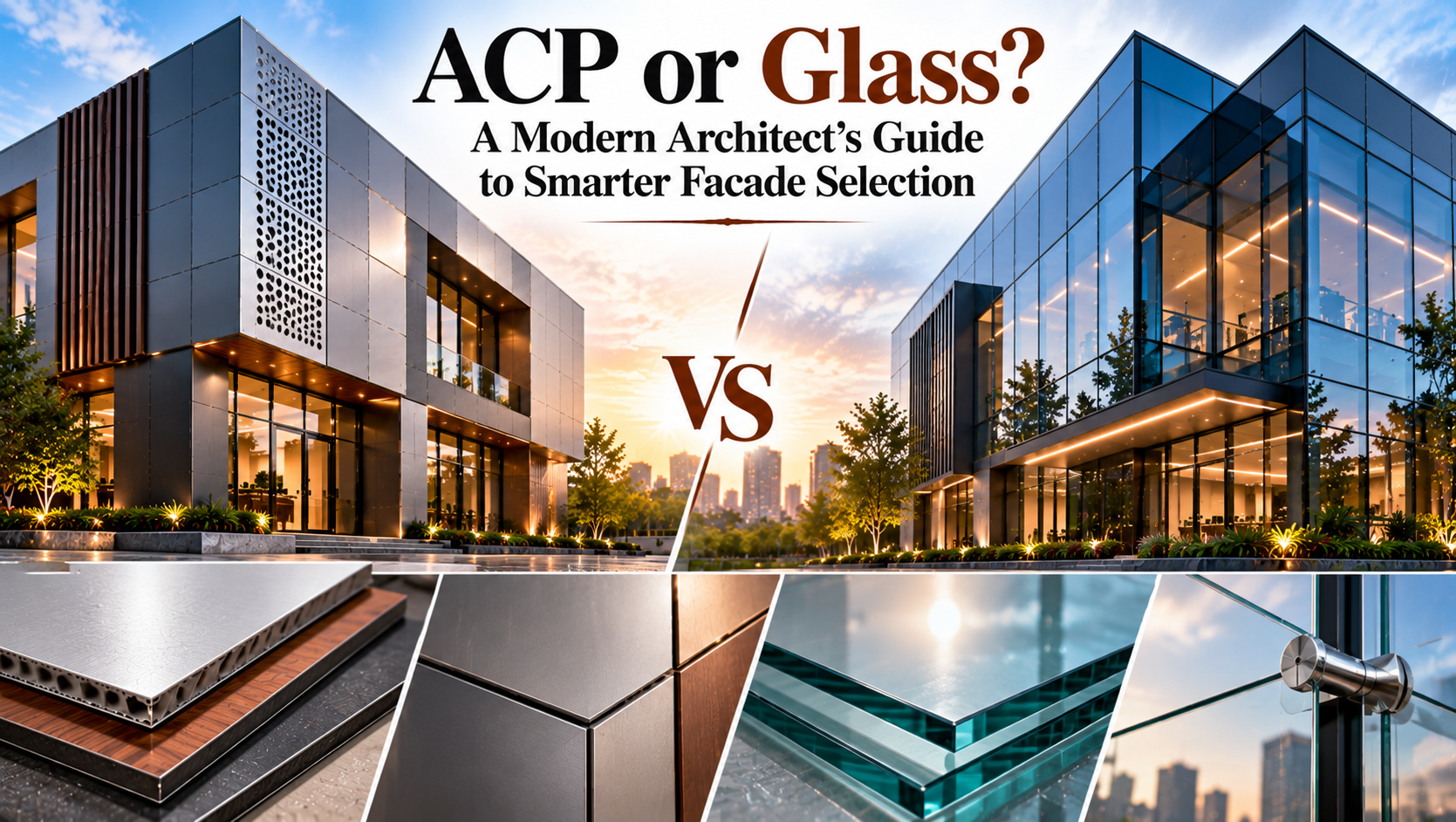
Modern architecture is no longer only about creating visually appealing buildings. Today, architects, builders, and property owners also focus on energy efficiency, durability, maintenance, sustainability, and long-term performance. One of the biggest decisions in modern façade design is choosing between ACP (Aluminium Composite Panels) and Glass façades.
Both materials are widely used in commercial buildings, offices, malls, hospitals, hotels, airports, and luxury residences. Glass façades offer transparency and a sleek modern appearance, while ACP sheets provide flexibility, durability, lightweight construction, and cost efficiency.
But which option is smarter for your project?
In this guide, we’ll compare ACP vs Glass across important factors including aesthetics, durability, maintenance, cost, insulation, safety, and applications to help architects make the right façade selection.
Understanding ACP Facades
ACP (Aluminium Composite Panel) is a modern cladding material made by bonding two aluminium sheets with a non-aluminium core. These panels are widely used for exterior cladding, elevation designs, signage, ceilings, partitions, and modern architectural façades.
ACP sheets are available in multiple finishes including:
- Wooden textures
- Metallic finishes
- Stone textures
- Matte and glossy colours
- Brushed aluminium
- Mirror finishes
Modern ACP panels also come with fire-retardant cores, UV-resistant coatings, anti-corrosion protection, and weatherproof surfaces.
Because of their lightweight structure and design flexibility, ACP sheets have become one of the most preferred façade materials in India.
Understanding Glass Facades
Glass façades are exterior building surfaces primarily made using structural or curtain wall glass systems. These façades create a transparent and premium appearance, making them common in corporate offices, luxury buildings, malls, and skyscrapers.
Modern glass façades use advanced technologies such as:
- Double-glazed glass
- Toughened safety glass
- Reflective glass
- Low-E energy-efficient glass
- Laminated acoustic glass
Glass façades are mainly chosen for their luxurious appearance and ability to maximize natural daylight inside buildings.
ACP vs Glass: Which Material Looks Better?
Aesthetics play a major role in façade selection.
Glass façades create a clean, modern, and premium corporate appearance. Large glass elevations make buildings appear open, sophisticated, and futuristic. This is why glass is commonly used in IT parks, airports, luxury offices, and high-rise towers.
However, ACP sheets provide significantly more design flexibility.
Architects can create:
- 3D elevations
- Curved façade designs
- Custom geometric patterns
- Wooden façade appearances
- Metallic luxury finishes
- Textured modern exteriors
Unlike glass, ACP allows architects to experiment with colours, textures, and creative elevations without limitations.
For example, a shopping mall may use reflective glass at the entrance while combining wooden ACP panels for warmth and modern aesthetics.
If your priority is visual creativity and flexibility, ACP often offers more possibilities.
Which Material Is More Durable?
Durability is one of the most important factors in façade selection.
Glass façades are durable but remain vulnerable to:
- Cracks
- Impact damage
- Thermal stress
- Breakage risks
- Sealant failure over time
Even toughened glass can shatter under extreme impact or installation errors.
ACP sheets, on the other hand, are highly impact-resistant and flexible. High-quality ACP panels are designed to withstand:
- Heavy rain
- UV exposure
- Moisture
- Pollution
- Wind pressure
- Temperature fluctuations
Premium ACP panels also resist corrosion and maintain their appearance for years with minimal fading.
In areas with harsh weather conditions or high pollution, ACP often performs better over the long term.
ACP vs Glass: Which Is More Cost Effective?
Budget is a major deciding factor in every construction project.
Glass façades generally involve:
- Higher material costs
- Structural support costs
- Specialized installation systems
- Expensive maintenance
- Higher replacement expenses
Large structural glazing systems can significantly increase overall project costs.
ACP façades are comparatively more affordable because they are:
- Lightweight
- Easier to install
- Faster to fabricate
- Less labour intensive
- Lower maintenance
For example, a commercial showroom using ACP cladding can achieve a premium modern appearance at a much lower cost compared to a full structural glass façade.
This makes ACP a preferred option for cost-conscious commercial projects.
Energy Efficiency Comparison
Energy efficiency has become a major concern in modern architecture.
Glass façades allow large amounts of sunlight into buildings, which improves natural lighting but can also increase indoor heat gain. This often increases air-conditioning costs, especially in hot climates like India.
Although energy-efficient Low-E glass helps reduce heat transfer, it still requires careful planning and insulation systems.
ACP sheets provide better thermal insulation compared to standard glass façades. ACP cladding helps reduce heat absorption and improves indoor temperature control.
As a result:
- Buildings remain cooler
- HVAC systems consume less energy
- Operational costs reduce over time
For tropical and high-temperature regions, ACP can be a smarter energy-efficient façade choice.
Maintenance Requirements
Maintenance costs directly affect long-term building ownership expenses.
Glass façades require regular cleaning because fingerprints, dust, stains, and water marks become highly visible. Tall buildings often require specialized façade cleaning systems and manpower.
Glass panels may also require periodic sealant replacements and repairs.
ACP sheets are easier to maintain. Most ACP surfaces only need occasional cleaning with water and mild detergent.
High-quality ACP coatings resist:
- Dirt accumulation
- Staining
- Corrosion
- Moisture damage
For buildings seeking low-maintenance exteriors, ACP is often the more practical solution.
Safety and Fire Resistance
Modern building safety standards demand better fire-resistant façade materials.
Traditional glass façades can crack or shatter under extreme heat exposure during fires.
Modern ACP manufacturers now offer fire-retardant ACP panels with FR grades like:
- B1 Grade
- A2 Grade
These panels help slow fire spread and improve building safety compliance.
Architects increasingly choose FR ACP panels for:
- Hospitals
- Airports
- Commercial towers
- Educational institutions
- Public infrastructure projects
When selecting façade materials, certified fire-retardant ACP panels offer better safety confidence.
Installation and Construction Speed
Construction speed is critical in modern commercial projects.
Glass façade installation requires:
- Structural framing
- Heavy lifting systems
- Precision engineering
- Skilled glazing teams
This can increase project timelines significantly.
ACP panels are lightweight and easy to fabricate, cut, bend, and install. ACP cladding systems allow faster project execution and reduced labour dependency.
For example, retail stores and commercial showrooms often prefer ACP because it enables quick façade completion without compromising aesthetics.
Best Applications for ACP Facades
ACP sheets are ideal for:
- Commercial buildings
- Showrooms
- Hospitals
- Educational institutes
- Retail stores
- Metro stations
- Residential elevations
- Petrol pumps
- Airports
- Hotel exteriors
ACP is especially suitable where durability, flexibility, and low maintenance are priorities.
Best Applications for Glass Facades
Glass façades are commonly used for:
- Corporate offices
- IT parks
- Luxury hotels
- High-rise towers
- Shopping malls
- Premium commercial buildings
Glass works best where natural lighting and transparency are architectural priorities.
Can ACP and Glass Be Used Together?
Yes. In fact, many modern architects combine ACP and glass to create balanced façades.
For example:
- ACP can be used for solid cladding sections
- Glass can highlight entrances and window systems
- Wooden ACP textures can soften corporate glass designs
This hybrid approach creates modern, energy-efficient, and visually attractive elevations.
Many premium commercial projects now use ACP + Glass combinations for both performance and aesthetics.
Why Architects Increasingly Prefer ACP Panels
Architects today prioritize more than just appearance. They seek façade materials that deliver:
- Durability
- Safety
- Faster execution
- Energy efficiency
- Design flexibility
- Lower maintenance
- Long-term value
ACP panels successfully meet all these modern construction demands.
With advanced finishes, fire-retardant technology, and versatile applications, ACP has become one of the smartest façade solutions in contemporary architecture.
Brands like Pioneer Panels are helping architects achieve premium façade designs with innovative ACP solutions designed for modern Indian infrastructure and climate conditions.
Conclusion
Both ACP and glass façades offer unique advantages in modern architecture. Glass provides openness and premium transparency, while ACP delivers flexibility, durability, safety, and cost efficiency.
If your project prioritizes:
- Creative design freedom
- Faster construction
- Lower maintenance
- Better insulation
- Budget-friendly execution
Then ACP is often the smarter façade selection.
However, combining ACP with glass can deliver the perfect balance of aesthetics and performance for modern buildings.
Choosing the right façade ultimately depends on your project goals, climate conditions, budget, and architectural vision.
FAQs
1. Which is better for building exteriors: ACP or glass?
Both materials have advantages. ACP is better for durability, maintenance, and flexibility, while glass is preferred for transparency and premium corporate aesthetics.
2. Is ACP cheaper than glass façade systems?
Yes, ACP façades are generally more affordable than structural glass systems in terms of material, installation, and maintenance costs.
3. Are ACP panels fire resistant?
Modern ACP panels are available in fire-retardant grades like B1 and A2, making them suitable for safer building applications.
4. Can ACP and glass be combined in one façade?
Yes, many architects combine ACP and glass to create modern, stylish, and energy-efficient building elevations.
5. Which façade material requires less maintenance?
ACP panels require less maintenance compared to glass façades, which need regular cleaning and periodic repairs.