
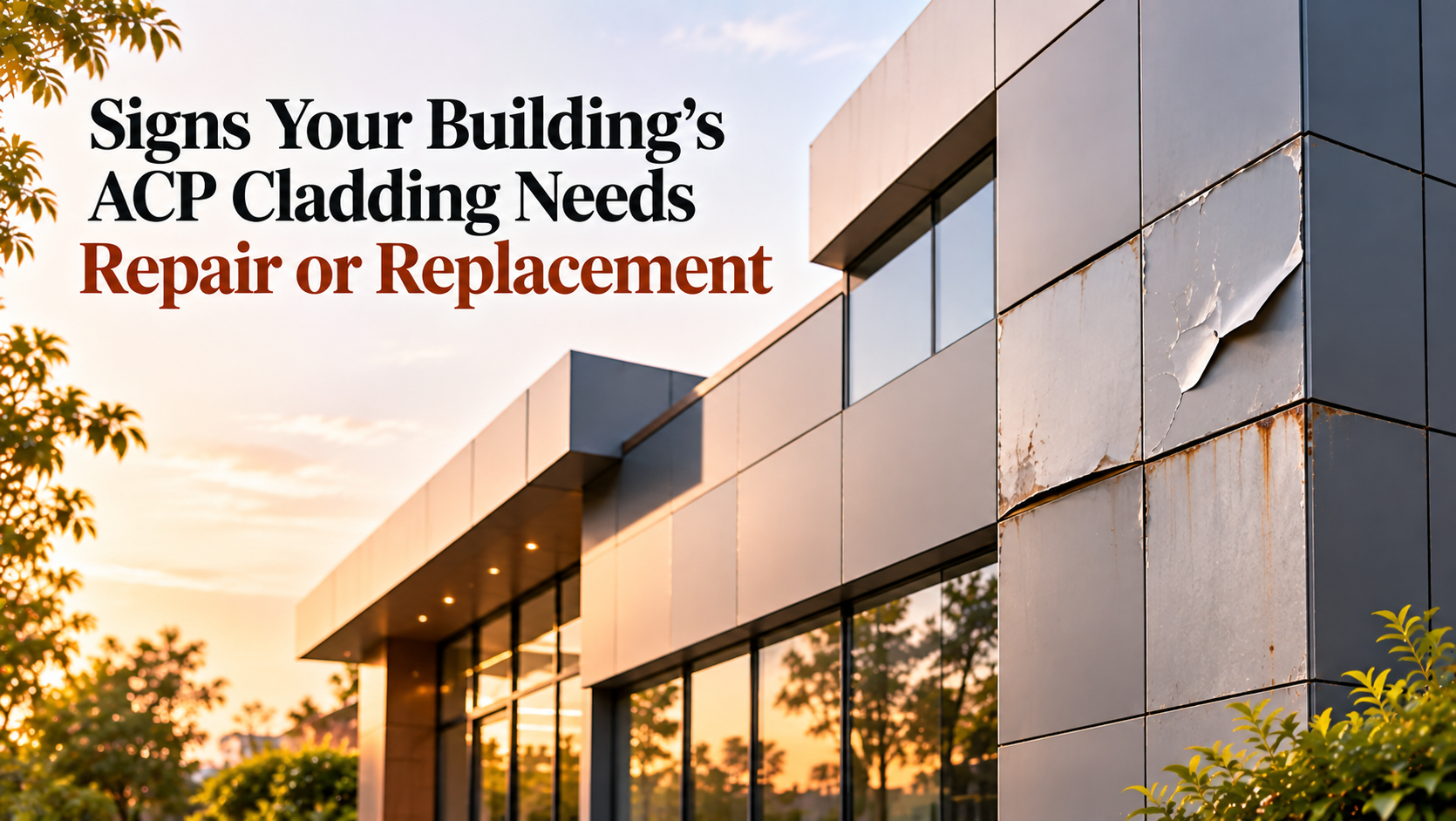
Aluminium Composite Panels (ACP) are widely used in modern building façades because they offer a lightweight cladding solution with a variety of colours, textures and finishes. They are commonly found on commercial buildings, office spaces, retail stores, hotels and residential properties.
However, like other exterior building materials, ACP cladding is exposed to sunlight, rain, humidity, pollution and temperature changes. Over time, these conditions, along with installation defects or inadequate maintenance, can affect the panels, joints and supporting structure.
Ignoring early warning signs can lead to more extensive façade damage, water leakage and potential safety concerns.
So, how do you know when your building’s ACP cladding needs attention?
Here are six common signs that indicate your ACP façade may need repair, professional inspection or replacement.
6 Signs Your Building’s ACP Cladding Needs Repair or Replacement
1. Visible Bulging, Warping or Uneven Panels
One of the most noticeable signs of ACP cladding damage is bulging or uneven panel surfaces. If sections of your building’s façade appear wavy, raised or distorted, it may indicate an underlying installation or panel-related problem.
ACP panels are exposed to temperature variations throughout the day. Aluminium expands and contracts with temperature changes, so the installation system must allow appropriate movement.
Bulging or warping may occur because of:
- Insufficient allowance for thermal expansion.
- Uneven or improperly aligned supporting frameworks.
- Incorrect fixing methods.
- Inadequate panel thickness or stiffness for the application.
- Water accumulation or damage behind the cladding.
What should you do?
Have the affected area inspected by a qualified façade professional. They should check panel alignment, fixing points, supporting framework and expansion joints before recommending repairs or replacement.
2. Cracks, Gaps or Peeling Sealant Around Panel Joints
Sealant plays an important role in protecting ACP façade joints against rainwater and environmental exposure. It helps maintain weather resistance while accommodating movement between panels.
Over time, sealant can deteriorate due to sunlight, temperature changes, ageing, movement or improper application.
Look for these warning signs:
- Cracked or split sealant.
- Sealant pulling away from panel edges.
- Visible gaps between adjoining panels.
- Shrinking or missing sealant.
- Water stains below façade joints.
Damaged sealant can allow water to enter the area behind the panels. If the problem continues, it may affect the supporting framework or surrounding building materials.
What should you do?
A professional should assess the affected joints, remove failed sealant where necessary and apply a compatible exterior-grade replacement. Simply applying a new layer over deteriorated sealant may not address the underlying problem.
3. Water Leakage or Damp Patches on Interior Walls
Water leakage is another important warning sign that should not be ignored.
If you notice damp patches, peeling interior paint, water stains or moisture near walls covered by ACP cladding, there may be a problem with the building’s exterior weatherproofing.
Possible causes include:
- Failed sealant around panel joints.
- Incorrect flashing installation.
- Open gaps around windows and doors.
- Damaged panel edges.
- Poor drainage behind the cladding.
- Unsealed openings for electrical or mechanical services.
Water entering behind ACP panels can affect the supporting structure and nearby wall materials. The visible damp patch may also be located some distance from the actual entry point.
What should you do?
Arrange a professional façade inspection to identify where the water is entering. Repairing only the interior wall without addressing the exterior source may result in recurring leakage.
4. Faded Colours, Chalking or Peeling Surface Coating
ACP panels are available in different colours and decorative finishes. However, prolonged exposure to sunlight, pollution, moisture and unsuitable cleaning chemicals can gradually affect their surface appearance.
If your building’s ACP façade looks significantly different from its original condition, the surface coating may be deteriorating.
Common signs include:
- Noticeable colour fading.
- Loss of surface gloss.
- Powdery residue when the surface is lightly wiped.
- Peeling or blistering of the coating.
- Uneven discolouration across panels.
The extent of deterioration depends on the coating system, product quality, environmental exposure and maintenance practices.
What should you do?
Start with an inspection to determine whether the issue is surface contamination, coating deterioration or damage to the panel itself. Cleaning may improve the appearance of surface dirt, but damaged coatings may require refinishing or panel replacement, depending on the product and manufacturer’s recommendations.
5. Delamination or Separation of Aluminium Layers
Delamination is one of the more serious defects that can affect Aluminium Composite Panels.
ACP sheets are manufactured by bonding two aluminium skins to a central core. If the bonding between these layers deteriorates, parts of the aluminium skin may separate from the core.
Visible warning signs can include:
- Aluminium skin lifting at panel edges.
- Raised or blistered areas.
- Separation around folded or routed sections.
- Unusual surface distortion.
- Visible separation at damaged panel edges.
Possible contributing factors include poor bonding during manufacturing, unsuitable fabrication, prolonged moisture exposure or excessive stress.
Not every surface blister or uneven area confirms delamination. A qualified professional should inspect the panel to determine the actual cause.
What should you do?
Do not ignore visible separation between the aluminium skin and core. Affected panels may need replacement, depending on the extent of damage. The inspection should also determine whether nearby panels have similar defects.
6. Loose Panels, Corroded Fixings or Unusual Rattling Sounds
ACP panels are installed using supporting frameworks, brackets, screws, rivets and other fixing components. These elements help keep the cladding securely attached to the building.
If you notice panels moving, rattling during strong winds or visible gaps around fixing points, the supporting system may need attention.
Other warning signs include:
- Rust stains around screws or rivets.
- Corrosion on visible metal brackets.
- Loose or displaced panels.
- Widening gaps between panels.
- Unusual movement during windy conditions.
It is important to remember that ACP aluminium surfaces do not typically produce rust stains themselves. Such stains may indicate corrosion of nearby steel fixings, brackets or supporting frameworks.
What should you do?
Potential safety concern
Loose or displaced façade panels can pose a falling-object risk. Keep people away from the affected area and arrange an urgent inspection by a qualified façade or structural professional. Do not attempt to tighten or repair elevated panels without appropriate access equipment and safety procedures.
ACP Cladding Problems: Repair or Replace?
Not every ACP defect requires complete façade replacement. The correct approach depends on the severity, location and extent of the damage.
| ACP cladding problem | Possible action |
| Minor surface dirt | Professional cleaning |
| Localised sealant deterioration | Remove and replace failed sealant |
| Small areas of coating damage | Assess suitability for refinishing or panel replacement |
| Localised panel dents | Replace affected panels if repair is unsuitable |
| Delamination | Replace affected panels after inspection |
| Loose panels or corroded fixings | Urgent inspection and repair of the fixing system |
| Widespread panel deterioration | Assess partial or complete façade replacement |
A professional assessment should also check the supporting framework, fixing arrangement, drainage, fire performance and the condition of the complete façade system.
How to Extend the Life of Your ACP Building Cladding
Regular inspection and appropriate maintenance can help identify minor problems before they become extensive.
Here are some practical maintenance recommendations:
- Inspect the façade periodically: Check for visible panel movement, gaps, dents and surface damage.
- Check sealant joints: Look for cracks, shrinkage and separation around panel edges.
- Clean panels correctly: Use cleaning products and methods recommended by the manufacturer.
- Avoid harsh chemicals: Strong solvents, abrasive cleaners and unsuitable tools can damage protective coatings.
- Check visible fixings: Look for corrosion, loose brackets and rust stains.
- Inspect after severe weather: Examine accessible façade areas after strong winds, heavy rain or storms.
- Maintain drainage details: Ensure water outlets and drainage paths are not blocked.
- Hire qualified professionals: Repairs involving elevated façades should be handled by trained personnel using suitable access and safety equipment.
Annual inspections are a useful maintenance starting point, although the frequency should be adjusted according to the building’s age, location, exposure and manufacturer’s recommendations.
cladexelevations.com+2
Frequently Asked Questions About ACP Cladding Repair and Replacement
1. How do I know if my building’s ACP cladding needs replacement?
Visible delamination, severe panel deformation, widespread coating deterioration, loose panels and extensive damage to the supporting system may indicate a need for replacement. A professional inspection is necessary to confirm the extent of the problem.
2. What causes ACP panels to bulge?
Bulging may result from inadequate expansion gaps, uneven supporting frameworks, incorrect fixing methods, unsuitable panel specifications or moisture-related problems.
3. Can damaged ACP sheets be repaired?
Some problems, such as localised sealant failure or surface contamination, may be repairable. However, delaminated, severely deformed or structurally compromised panels generally require replacement.
4. Why is water leaking through my ACP building façade?
Water leakage can occur because of failed sealant joints, damaged flashings, unsealed openings, poor drainage or incorrect installation. The actual entry point should be identified before repairs begin.
5. How often should ACP cladding be inspected?
A periodic inspection at least once a year is a useful starting point. Buildings in coastal, industrial or severe weather environments may require more frequent inspections.
6. What is ACP panel delamination?
Delamination occurs when the aluminium skin separates from the central core of an ACP sheet. It can affect the panel’s integrity and may require replacement.
7. Does faded ACP cladding need to be replaced?
Not always. Fading may result from surface contamination or coating deterioration. A professional should assess the coating condition to determine whether cleaning, refinishing or replacement is appropriate.
8. Can loose ACP panels be dangerous?
Yes. Loose or displaced panels can become a falling-object hazard, particularly during strong winds. The affected area should be kept clear until a qualified professional has assessed it.
Choose the Right ACP Sheets for Long-Lasting Building Facades with Pioneer Panels
The appearance and performance of an ACP façade depend on several factors, including panel quality, coating, core composition, installation methods and regular maintenance.
Recognising early warning signs such as bulging, damaged sealant, water leakage, fading, delamination and loose panels can help building owners take timely action.
For new construction and façade renovation projects, selecting suitable Aluminium Composite Panels is equally important. Pioneer Panels offers metal composite panel solutions across different finish collections, including Wood, Metal, Earth, Colours and Innovation.
These collections provide a variety of surface finishes for architectural and decorative applications. Before selecting a panel, review its technical specifications, intended application and relevant fire-performance documentation to ensure it meets your project’s requirements.