
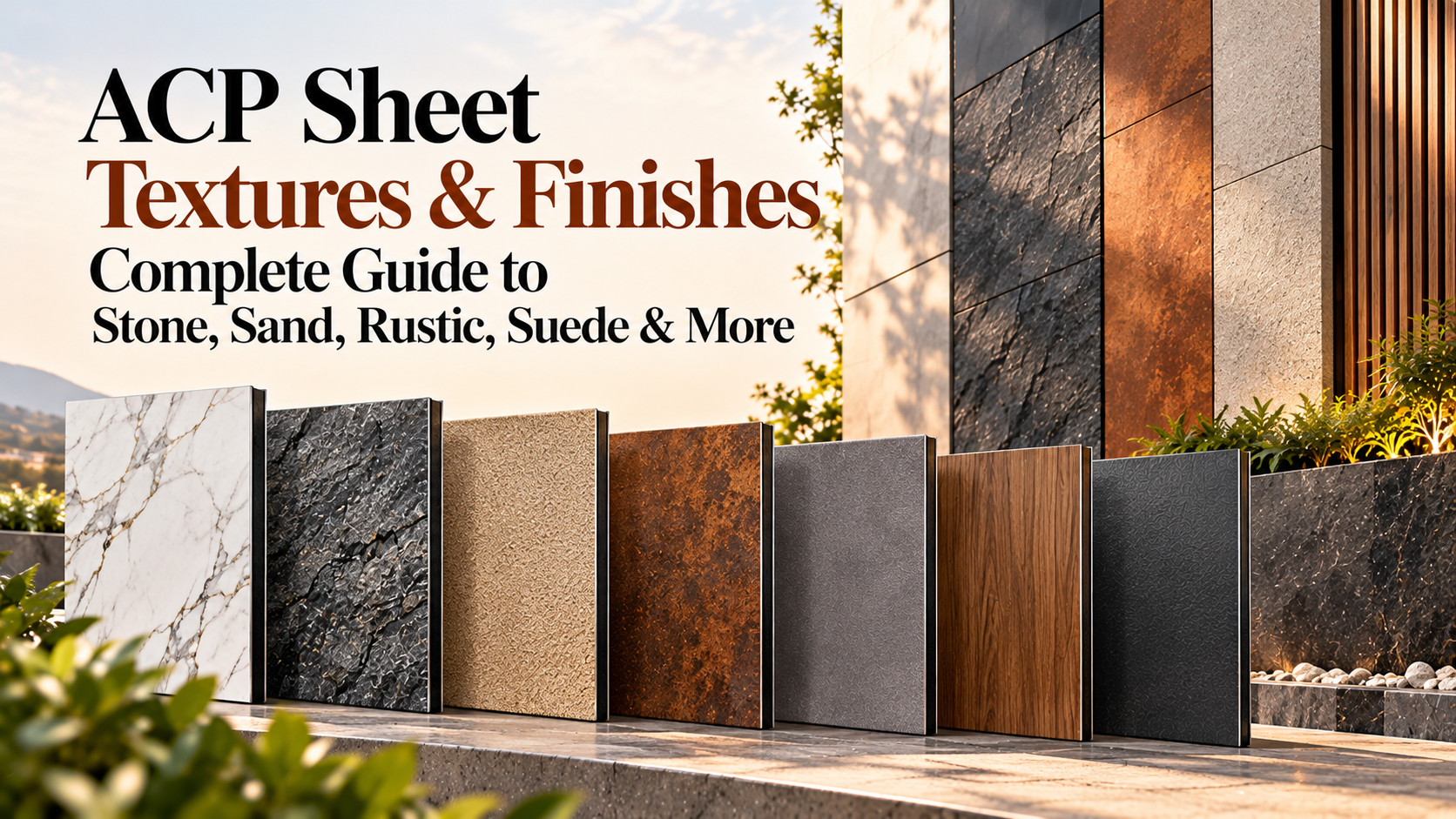
ACP sheets are no longer limited to plain colours and basic metallic surfaces. Modern Aluminium Composite Panels are available in a wide variety of textures, patterns, surface effects, and finishes, allowing architects, interior designers, builders, and homeowners to create distinctive facades and interiors.
From natural stone-inspired surfaces to soft suede textures, rustic finishes, sand-like effects, and expressive natural patterns, textured ACP sheets can completely change the character of a building.
The right texture can make a facade look warmer, more natural, luxurious, industrial, minimal, or contemporary without changing the underlying cladding system.
This complete guide explains the most popular ACP sheet textures and finishes, how they differ, where they can be used, and how to choose the right option for your project.
What Are ACP Sheet Textures and Finishes?
An ACP sheet texture refers to the visual and tactile appearance of the panel surface. A finish can be created to resemble natural materials such as stone, sand, concrete, wood, or other architectural surfaces.
The purpose of these finishes is not only decorative. They can also help designers create visual depth and break the monotony of large facade areas.
For example, instead of covering an entire building with one flat colour, a designer might use a stone-inspired texture on the entrance, a rustic surface on a feature wall, and a solid colour on the remaining facade.
This creates a more layered architectural appearance.
Why Are Textured ACP Sheets Popular?
Textured ACP sheets have become useful for modern architecture because they provide the appearance of different materials while retaining the characteristics of an engineered panel system.
Some of the major advantages include:
Greater Design Flexibility
Architects can select from different textures instead of relying only on plain colours.
Modern Architectural Appearance
Textured finishes can add depth and character to otherwise simple elevations.
Material-Inspired Designs
ACP surfaces can reproduce visual concepts inspired by stone, sand, wood, concrete, and other natural materials.
Easy Combination With Other Finishes
Textured ACP can be combined with solid, metallic, glossy, wooden, or other ACP finishes to create contrast.
Suitable for Large Surfaces
A texture can visually break up large facade areas and make the building appear more detailed.
Main Types of ACP Sheet Textures and Finishes
Pioneer Panels’ Earth collection includes several texture-focused series, including:
- Natural Surfaces Series
- Natural Stone Series
- Sand Series
- Rustic Series
- Suede Series
Each finish has its own visual character and can be selected according to the architectural style of the project.
1. Natural Surfaces ACP
The Natural Surfaces Series is designed around textures inspired by natural elements and artisanal surface treatments.
The collection includes finishes such as Venetian Lime Concrete, Tropical Storm, and Cleft Stone, giving designers access to tactile and visually expressive surfaces.
These finishes are particularly useful when the goal is to create a facade that feels architectural rather than simply painted.
Key Characteristics
Natural Surfaces ACP can offer:
- Organic-looking textures
- Tactile visual depth
- Contemporary surface patterns
- Natural-inspired appearance
- Distinctive architectural character
Where Is It Best Used?
Natural Surfaces can work well for:
- Modern home elevations
- Feature walls
- Luxury residential projects
- Commercial facades
- Entrance areas
- Contemporary interiors
Example
A modern home with a simple white exterior can use a cleft-stone-inspired ACP panel around the entrance to create a strong focal point.
2. Natural Stone ACP
Stone has traditionally been used in architecture because it creates a premium and substantial appearance. However, natural stone can add considerable weight and may require more complex installation depending on the application.
The Natural Stone Series takes inspiration from premium quartz and natural stone surfaces.
The product range includes stone-inspired options such as Panther Fire, Brown Fire, and Staturio Quartz.
Key Characteristics
Natural Stone ACP focuses on:
- Stone-inspired visual depth
- Premium appearance
- Sophisticated patterns
- Rich natural-looking surfaces
- Luxury architectural styling
Where Is It Best Used?
It can be suitable for:
- Luxury home facades
- Feature walls
- Entrance walls
- Reception areas
- Retail interiors
- Hospitality projects
- Premium commercial spaces
Example
A luxury villa can use a quartz-inspired ACP finish around the main entrance while combining it with solid-colour ACP and glass.
3. Sand Texture ACP
The Sand Series is designed to replicate the visual and tactile character of a sandy surface.
Instead of looking completely smooth, this type of finish introduces a subtle roughness that creates understated visual depth.
Sand-inspired finishes can be particularly effective when the designer wants a natural and earthy appearance without the dramatic pattern of stone.
Key Characteristics
Sand finishes can provide:
- Tactile surface appearance
- Fine-grain visual effect
- Earthy character
- Understated sophistication
- Contemporary styling
Where Is It Best Used?
Sand ACP can work well for:
- Residential facades
- Feature walls
- Modern commercial buildings
- Minimalist architecture
- Interior accent surfaces
Example
A beige or warm neutral sand-finish ACP can complement a modern house featuring natural stone, wood, glass, and concrete elements.
4. Rustic ACP
The Rustic Series focuses on natural and weathered-looking textures.
Rustic surfaces are useful when the design calls for something less polished and more organic.
Instead of presenting a perfectly smooth surface, the rustic finish introduces character inspired by naturally aged materials.
Key Characteristics
Rustic ACP can provide:
- Weathered visual character
- Natural-looking texture
- Earthy tones
- Matte appearance
- Strong architectural depth
Where Is It Best Used?
Rustic finishes can be considered for:
- Farmhouse-style homes
- Contemporary villas
- Resort architecture
- Cafes and restaurants
- Feature walls
- Rustic-modern commercial spaces
Example
A resort facade combining rustic ACP with wood-inspired panels can create a warm and natural architectural theme.
5. Suede ACP
The Suede Series offers a different approach to textured ACP.
Instead of a heavily rugged or stone-like appearance, suede-inspired surfaces combine a slightly rugged character with a softer visual impression.
The finish is designed around earthy hues, a matte appearance, and refined surface texture.
Key Characteristics
Suede finishes can provide:
- Soft-looking texture
- Matte appearance
- Earthy colours
- Refined surface character
- Contemporary styling
Where Is It Best Used?
Suede ACP can be suitable for:
- Modern residential interiors
- Feature walls
- Luxury interiors
- Commercial spaces
- Contemporary facades
- Hospitality projects
Example
A warm suede-finish ACP can be used behind a reception desk or on a feature wall to create a sophisticated, understated interior.
ACP Texture Comparison
| ACP Texture | Appearance | Design Character | Best For |
| Natural Surfaces | Organic and expressive | Contemporary and artistic | Facades and feature walls |
| Natural Stone | Stone-inspired | Premium and luxurious | Luxury exteriors and interiors |
| Sand | Fine, sandy texture | Earthy and understated | Modern residential designs |
| Rustic | Weathered and natural | Warm and organic | Rustic-modern architecture |
| Suede | Soft and matte | Refined and contemporary | Interiors and elegant facades |
Textured ACP vs Plain ACP
Plain ACP sheets create a clean and uniform appearance. They are ideal when the architectural concept depends on simplicity and strong colour blocks.
Textured ACP, on the other hand, adds another visual dimension.
For example, consider a building with a large grey facade.
Using only a grey solid-colour ACP may produce a clean appearance, but introducing a stone, sand, or suede-inspired section can break up the surface and create a more sophisticated composition.
Plain ACP Is Better When:
- You want a minimalist facade
- Large areas need a uniform appearance
- Colour is the main design feature
- The building has a simple geometric form
Textured ACP Is Better When:
- You want more visual depth
- You want a natural-material appearance
- The facade needs feature sections
- You want to create contrast between materials
How to Choose the Right ACP Texture?
Selecting a texture should be based on the architecture rather than choosing a finish simply because it looks attractive in a catalogue.
Consider the Architectural Style
Minimalist buildings may work better with subtle sand or suede textures, while luxury buildings may benefit from natural stone-inspired finishes.
Rustic textures can work well with earthy architectural concepts.
Consider the Colour Palette
Texture and colour should work together.
Neutral stone and sand finishes can complement:
- Beige
- White
- Brown
- Grey
- Charcoal
Wood-inspired finishes can add warmth, while metallic finishes can introduce a more contemporary character.
Consider the Building Size
A highly expressive pattern can become visually overwhelming when used across an entire facade.
For large buildings, consider using a dominant neutral finish and a stronger texture only in selected architectural sections.
Consider Lighting
Textures can look different under direct sunlight, shade, artificial lighting, and different viewing angles.
A sample should therefore be examined in realistic lighting conditions before making the final selection.
Best ACP Textures for Modern Home Exteriors
For modern residential architecture, different textures can create different moods.
Natural Stone for Luxury
Stone-inspired finishes are ideal when the goal is a premium and sophisticated elevation.
Sand for Minimalist Warmth
Sand textures work well when the design needs subtle visual depth without an overly dramatic pattern.
Rustic for Natural Character
Rustic ACP can add warmth and an organic feel to contemporary homes.
Suede for Refined Minimalism
Suede finishes can provide a softer visual appearance while maintaining a modern aesthetic.
Natural Surfaces for Statement Exteriors
Natural Surfaces can work especially well when the facade needs a distinctive feature section.
Best ACP Textures for Commercial Buildings
Commercial architecture often needs to balance appearance with strong visual identity.
Retail Stores
Natural stone and metallic-inspired textures can help create premium storefronts.
Offices
Subtle sand, suede, or modern stone textures can give office exteriors a professional appearance.
Restaurants and Cafes
Rustic surfaces can complement warm, experiential design concepts.
Hotels and Resorts
Natural surfaces and rustic textures can work well with hospitality-inspired architecture.
Can Different ACP Textures Be Combined?
Yes. Combining textures can create more interesting architectural compositions.
For example:
Stone + Solid Colour: A stone-inspired feature wall can be combined with white or grey ACP.
Sand + Wood: A sandy textured panel can work alongside wooden ACP for a natural facade.
Rustic + Metallic: Rustic texture can be paired with metallic accents for an industrial-modern look.
Suede + Glossy: A matte suede surface can contrast effectively with a glossy panel.
The important point is balance. Using too many unrelated textures on one elevation can make the building appear visually crowded.
Textured ACP for Feature Walls
One of the most effective applications of textured ACP is the feature wall.
A feature wall is designed to attract attention and create a focal point.
Instead of covering every surface with a patterned finish, you can use textured ACP on:
- Main entrance walls
- Balcony walls
- Reception walls
- Staircase walls
- TV walls
- Retail display backgrounds
- Lobby areas
This approach allows a strong texture to stand out without overwhelming the overall design.
Are Textured ACP Sheets Suitable for Exterior Use?
Textured ACP can be considered for exterior use when the selected panel and finish are specifically designed for exterior architectural applications.
However, the correct specification matters. Factors such as coating, substrate construction, environmental exposure, installation method, and project location should be considered before final selection.
For exterior projects, always choose a product according to the manufacturer’s application and technical recommendations.
Maintenance of Textured ACP Sheets
One of the advantages of ACP surfaces is that they can generally be maintained through routine cleaning.
However, textured finishes may require slightly more attention than completely smooth surfaces because dust can collect within deeper patterns.
Basic maintenance should include:
- Regular dust removal
- Periodic cleaning with appropriate methods
- Avoiding abrasive cleaning materials
- Following the manufacturer’s cleaning recommendations
- Inspecting joints and installation areas periodically
The maintenance requirement can vary depending on whether the panel is being used indoors or outdoors.
Texture vs Finish: Are They the Same?
The terms texture and finish are often used interchangeably, but they can describe slightly different aspects of a panel.
Texture generally refers to the surface pattern or tactile character, such as stone, sand, rustic, or suede.
Finish can refer more broadly to the overall surface treatment, including colour appearance, gloss level, coating characteristics, and texture.
For example, a panel could have a stone-inspired texture with a matte finish.
Understanding both elements is important when selecting ACP for a project.
Why Choose Pioneer Panels for Textured ACP?
Pioneer Panels offers a dedicated Earth collection featuring Natural Surfaces, Natural Stone, Sand, Rustic, and Suede Series.
This collection allows designers to create facades and interiors inspired by different natural materials and textures without relying solely on conventional flat-colour surfaces.
The range can support different architectural styles, whether the project calls for a luxury stone-inspired appearance, a subtle sand texture, a naturally weathered rustic look, or a refined suede finish.
This makes textured ACP a useful design option for architects, builders, contractors, interior designers, and homeowners looking to introduce more depth and material character into modern spaces.
Which ACP Texture Should You Choose?
The ideal texture depends on the appearance you want to create.
| Desired Look | Recommended ACP Texture |
| Luxury stone appearance | Natural Stone |
| Organic modern appearance | Natural Surfaces |
| Subtle earthy texture | Sand |
| Weathered natural look | Rustic |
| Soft and refined appearance | Suede |
| Modern feature wall | Natural Surfaces or Natural Stone |
| Warm residential facade | Sand or Rustic |
| Contemporary interior | Suede or Natural Surfaces |
Conclusion
ACP sheet textures have transformed the way architects and designers approach modern facades and interiors. Instead of relying only on flat colours, today’s panels can introduce the visual character of stone, sand, rustic surfaces, suede, concrete-inspired textures, and other natural materials.
The right texture can add depth, warmth, luxury, or a contemporary architectural identity to a space.
The Natural Surfaces Series is suited to expressive architectural finishes, the Natural Stone Series creates a premium stone-inspired appearance, the Sand Series offers subtle earthy texture, the Rustic Series adds weathered character, and the Suede Series provides a softer matte aesthetic.
Before making a final decision, consider the building style, colour scheme, application, lighting, scale, and surrounding materials. A carefully selected ACP texture can turn an ordinary facade into a much more visually distinctive architectural surface.
FAQs
What are the most popular ACP sheet textures?
Popular textured ACP options include stone, sand, rustic, suede, wood, concrete-inspired, and other natural surface finishes.
Which ACP texture is best for a luxury facade?
Natural Stone ACP can be a strong choice for luxury facades because stone-inspired patterns can create a premium and sophisticated appearance.
Is Sand texture ACP suitable for modern homes?
Yes. Sand-inspired finishes can work well for contemporary homes, particularly when the design calls for an earthy and understated appearance.
What is Rustic ACP used for?
Rustic ACP is commonly suited to designs that need weathered, natural, earthy, or organic character. It can be used for residential facades, hospitality projects, commercial buildings, and feature walls.
What is Suede ACP?
Suede ACP is a textured finish designed around a soft-looking, matte, and refined surface character with earthy tones.
Can textured ACP be used for building exteriors?
Yes, provided the selected panel and finish are specified for exterior architectural use and installed according to the manufacturer’s recommendations.
Can two different ACP textures be used on one facade?
Yes. Combining textures such as stone, sand, wood, metallic, or solid-colour ACP can create contrast and visual depth. However, the combination should remain balanced.
Is textured ACP difficult to maintain?
Textured ACP generally requires routine cleaning and maintenance, similar to other architectural cladding surfaces. Deeper textures may require more careful cleaning to remove dust from the surface.
Which is better: textured ACP or plain ACP?
Neither is universally better. Plain ACP is ideal for clean, minimalist designs, while textured ACP is better when you want visual depth, material-inspired aesthetics, or feature surfaces.
How do I select the right ACP texture?
Consider the building’s architectural style, colour palette, facade size, application, lighting, surrounding materials, and desired visual effect before selecting the texture.