
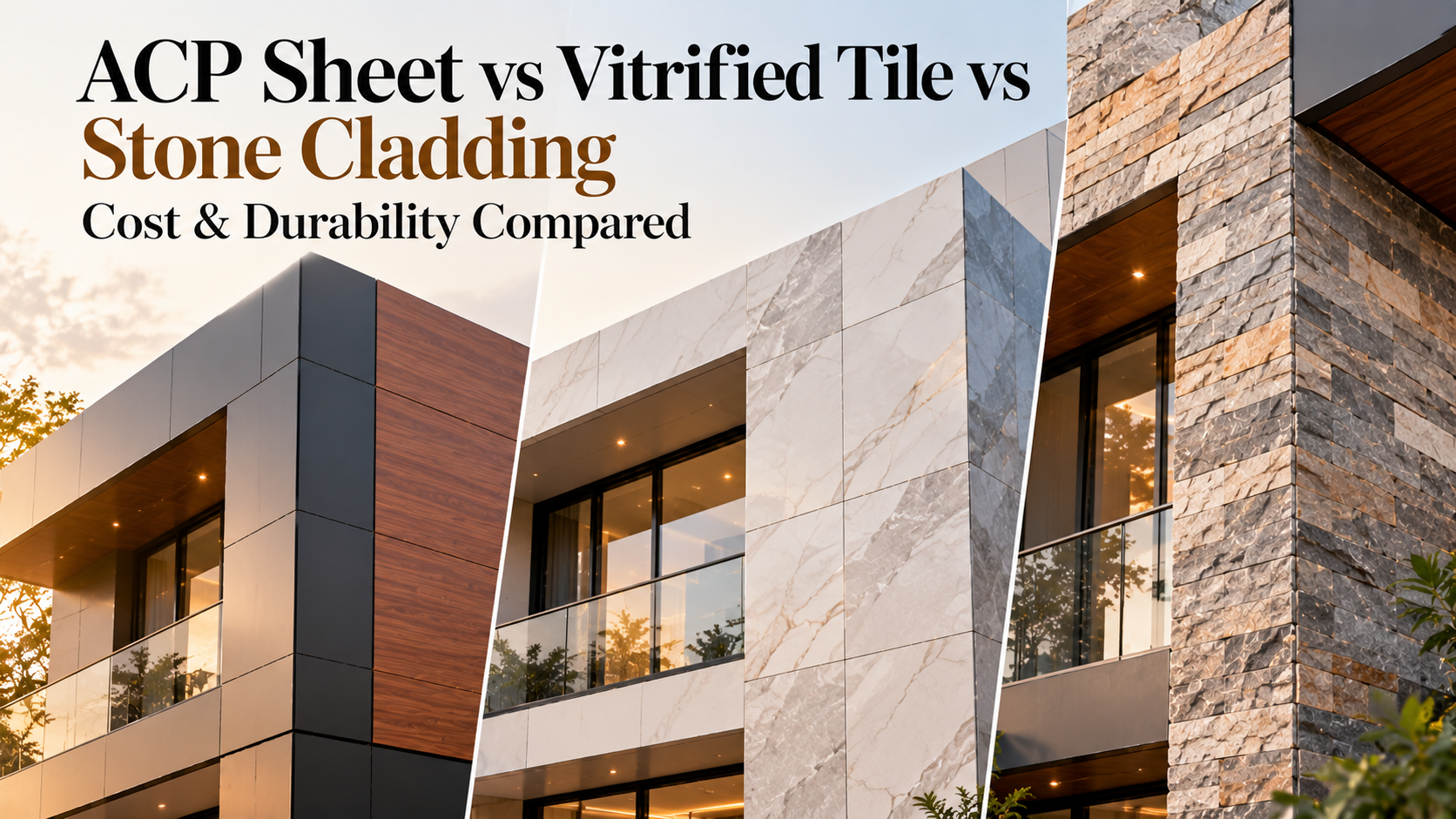
Choosing the right exterior cladding material is one of the most important decisions in modern construction. Whether you’re designing a residential villa, commercial building, apartment, or office façade, the material you select will impact your building’s appearance, maintenance, durability, and overall cost for years to come.
Among the most popular options in India are ACP sheets, vitrified tiles, and natural stone cladding. Each material offers unique advantages, but they differ significantly in terms of price, installation, lifespan, weather resistance, and design flexibility.
This guide compares ACP sheets, vitrified tiles, and stone cladding to help you choose the best material for your project in 2026.
What Is an ACP Sheet?
Aluminium Composite Panel (ACP) is a lightweight cladding material made by bonding two aluminium sheets to a polyethylene or fire-retardant mineral core. ACP is widely used for modern facades, elevations, canopies, signage, and interior wall cladding.
Best Applications
- Commercial facades
- Residential elevations
- Showrooms
- Office buildings
- Hotels
- Retail stores
What Is Vitrified Tile Cladding?
Vitrified tiles are high-density ceramic tiles manufactured through a vitrification process. They are commonly used for exterior walls because of their low water absorption and polished appearance.
Best Applications
- Apartment elevations
- Residential exteriors
- Balcony walls
- Interior feature walls
What Is Stone Cladding?
Stone cladding uses natural or engineered stone to create a luxurious and timeless exterior. Materials include granite, sandstone, slate, marble, and quartzite.
Best Applications
- Luxury villas
- Hotels
- Premium residences
- Landscape walls
- Feature facades
Cost Comparison Per Sq Ft
The overall project cost depends on material quality, finish, installation, and design complexity.
| Material | Approx. Price (Per Sq Ft) |
| ACP Sheet | ₹180 – ₹500 |
| Vitrified Tile | ₹120 – ₹350 |
| Stone Cladding | ₹250 – ₹800+ |
ACP sheets offer one of the best balances between affordability and premium aesthetics, while natural stone is typically the most expensive option.
Durability Comparison
| Feature | ACP Sheet | Vitrified Tile | Stone Cladding |
| Average Lifespan | 15–25 Years | 20–30 Years | 30+ Years |
| Weather Resistance | Excellent | Very Good | Excellent |
| UV Resistance | High | Good | Excellent |
| Corrosion Resistance | Excellent | Yes | Yes |
| Maintenance | Low | Moderate | Moderate |
| Weight | Lightweight | Medium | Heavy |
While stone offers the longest lifespan, ACP provides excellent durability with significantly lower structural weight.
1. Weight & Structural Load
One major advantage of ACP sheets is their lightweight construction.
ACP Sheet
- Lightweight
- Reduces building load
- Easier transportation
- Faster installation
Vitrified Tile
- Heavier than ACP
- Requires stronger adhesive systems
Stone Cladding
- Highest structural load
- Requires robust support systems
- Increased installation complexity
For high-rise buildings, lightweight materials like ACP often become the preferred choice.
2. Installation Time
Project completion speed is another important factor.
ACP Sheets
- Easy fabrication
- Quick installation
- Minimal labour time
Vitrified Tiles
- Slower installation
- Grouting required
- Precision alignment needed
Stone Cladding
- Most labour-intensive
- Heavy lifting required
- Longer project timelines
ACP panels are ideal for projects with tight construction schedules.
3. Design Flexibility
Modern architecture demands creative facade solutions.
ACP Offers
- Wood textures
- Stone finishes
- Metallic colours
- Matte surfaces
- Gloss finishes
- Curved designs
- Custom geometric panels
Vitrified Tiles
Provide limited flexibility in shaping and bending.
Stone Cladding
Offers natural beauty but fewer customization possibilities compared to ACP.
For contemporary elevations, ACP provides the greatest design freedom.
4. Weather Performance
Exterior materials must withstand:
- Rain
- Heat
- UV rays
- Humidity
- Pollution
ACP Sheets
Premium PVDF-coated ACP panels deliver excellent weather resistance and long-lasting colour retention.
Vitrified Tiles
Resist moisture well but may experience joint maintenance over time.
Stone
Natural stone performs exceptionally well but may require periodic sealing depending on the material.
5. Maintenance Comparison
| Material | Maintenance Level |
| ACP Sheet | Low |
| Vitrified Tile | Moderate |
| Stone Cladding | Moderate |
ACP panels typically require only occasional cleaning with water and mild detergent, making them one of the easiest facade materials to maintain.
Which Material Is Best for Residential Homes?
Choose ACP If You Want:
- Modern elevation
- Wood or metallic finishes
- Lightweight facade
- Faster installation
- Low maintenance
Choose Vitrified Tiles If You Want:
- Budget-friendly exterior
- Glossy ceramic appearance
- Apartment wall cladding
Choose Stone Cladding If You Want:
- Premium luxury appearance
- Natural textures
- Timeless architectural style
Environmental Performance
Modern construction increasingly prioritizes sustainable materials.
ACP Sheets
- Recyclable aluminium
- Lightweight transportation
- Energy-efficient installation
Vitrified Tiles
Durable but energy-intensive to manufacture.
Stone
Natural material with excellent longevity but higher transportation weight.
Which Material Offers the Best Value?
For most residential and commercial projects, ACP sheets provide the strongest overall value because they combine:
- Affordable pricing
- Premium appearance
- Excellent durability
- Low maintenance
- Lightweight construction
- Modern architectural finishes
Stone remains ideal for luxury projects, while vitrified tiles work well for cost-conscious residential developments.
Why Choose Pioneer Panels?
Pioneer Panels offers premium ACP sheet solutions designed for modern exterior architecture.
The collection includes:
- PVDF Exterior ACP Sheets
- Fire-Retardant ACP Panels
- Wood Finish Series
- Metallic Series
- Stone Texture Collection
- Matte & Gloss Colour Range
With durable coatings, superior weather resistance, and contemporary finishes, Pioneer Panels helps architects and homeowners create elegant facades that are built to last.
Conclusion
When comparing ACP sheets, vitrified tiles, and stone cladding, the best choice depends on your project’s budget, design goals, and structural requirements.
- ACP Sheets are ideal for modern, lightweight, and low-maintenance facades.
- Vitrified Tiles offer an economical solution for residential wall cladding.
- Stone Cladding delivers unmatched natural luxury for premium architectural projects.
For a balance of aesthetics, durability, cost, and installation efficiency, ACP sheets remain one of the smartest facade materials for 2026.
Frequently Asked Questions (FAQs)
1. Which is cheaper: ACP sheet or stone cladding?
ACP sheets are generally more affordable, with prices starting around ₹180 per sq ft, while stone cladding is typically more expensive.
2. Is ACP better than vitrified tile for exterior walls?
ACP offers better design flexibility, lighter weight, and faster installation, making it a popular choice for modern facades.
3. How long do ACP sheets last?
Premium ACP sheets with PVDF coating typically last 15–25 years or more with proper installation and maintenance.
4. Which cladding material requires the least maintenance?
ACP sheets require the least maintenance, as they mainly need occasional cleaning to retain their appearance.
5. Can ACP sheets replicate stone or wood finishes?
Yes. Modern ACP sheets are available in realistic wood, stone, marble, metallic, and textured finishes for contemporary architectural designs.