
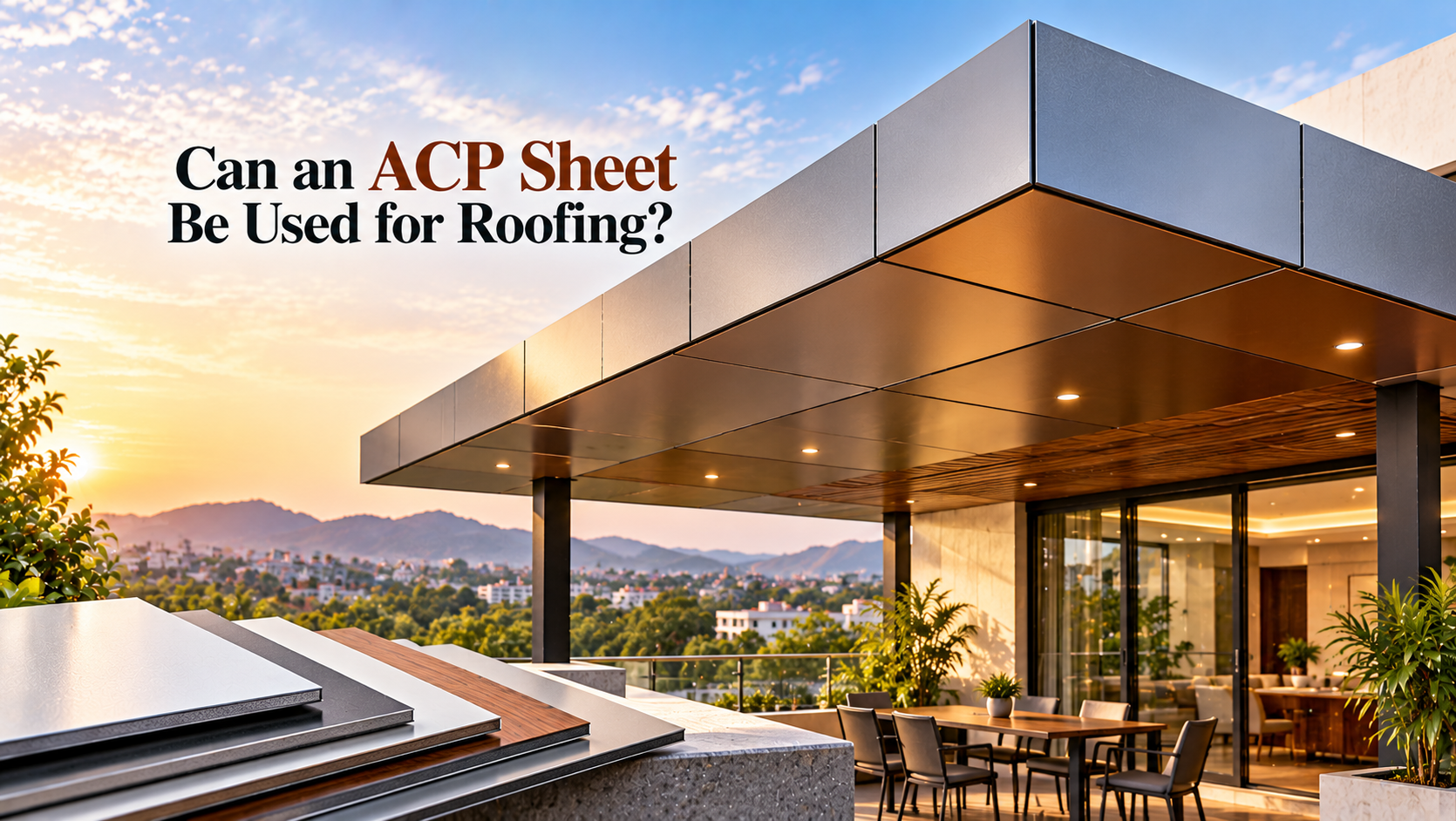
Aluminium Composite Panels (ACP sheets) are widely used in modern architecture for exterior cladding, building facades, interior walls, ceilings, and signage. Their lightweight construction, attractive finishes, and excellent durability make them a preferred choice for architects and builders.
A common question among homeowners and contractors is: Can ACP sheets be used for roofing?
The answer is yes—but with certain limitations. ACP sheets are suitable for specific roofing applications such as canopies, porch roofs, entrance covers, false roofing, and architectural roof features. However, they are not recommended as the primary structural roofing material for large buildings.
In this guide, we’ll explain where ACP sheets work well for roofing, their advantages, limitations, and how to choose the right ACP panel for roof-related applications.
What Is an ACP Sheet?
An ACP (Aluminium Composite Panel) is made by bonding two aluminium sheets to a polyethylene (PE) or fire-retardant (FR) mineral core.
This structure makes ACP sheets:
- Lightweight
- Strong
- Weather-resistant
- Easy to fabricate
- Visually appealing
Because of these qualities, ACP sheets are widely used in modern architectural projects.
Can ACP Sheets Be Used for Roofing?
Yes, ACP sheets can be used for roofing in decorative and non-structural applications.
They are commonly installed for:
- Entrance canopies
- Balcony roofs
- Porch roofing
- Walkway covers
- Parking shed facades
- Terrace shade structures
- False roofing
- Architectural roof extensions
However, ACP sheets should not replace structural roofing materials such as metal roofing sheets or reinforced concrete roofs.
Advantages of Using ACP Sheets for Roofing
1. Lightweight Construction
ACP sheets are significantly lighter than traditional roofing materials.
Benefits include:
- Reduced structural load
- Easier transportation
- Faster installation
- Lower installation costs
This makes ACP suitable for modern canopy and shade structures.
2. Attractive Appearance
ACP roofing creates a sleek and contemporary look.
Available finishes include:
- Wood finish
- Metallic finish
- Matte colours
- Glossy colours
- Stone textures
- Brushed aluminium
These finishes help architects design elegant roof features.
3. Weather Resistance
Premium ACP sheets resist:
- Rain
- Sunlight
- Moisture
- Corrosion
- UV rays
PVDF-coated ACP sheets perform especially well in outdoor environments.
4. Easy Fabrication
ACP sheets can be:
- Cut
- Folded
- Bent
- Routed
- Curved
This flexibility allows architects to create unique roofing designs.
5. Low Maintenance
Unlike wood or painted steel, ACP roofing requires very little maintenance.
Routine cleaning is usually enough to keep the surface looking new.
6. Fire-Retardant Options
Modern FR ACP sheets are available with fire-retardant mineral cores.
These panels provide improved fire safety and are preferred for commercial applications.
Where ACP Roofing Works Best
Entrance Canopies
ACP sheets create modern entrance canopies for:
- Homes
- Hotels
- Corporate offices
- Hospitals
Balcony Roofs
ACP roofing provides shade while enhancing exterior aesthetics.
Porch Covers
Many residential projects use ACP panels to create stylish porch roofs.
Walkway Shelters
Commercial buildings often install ACP-covered walkways to protect visitors from sun and rain.
Decorative Roof Features
Architects use ACP to create floating roof elements and contemporary roof designs.
Where ACP Sheets Should Not Be Used
Although ACP is versatile, it is not recommended for:
- Main load-bearing roofs
- Industrial roofing exposed to heavy loads
- Roofs requiring structural support
- Areas with frequent heavy foot traffic
ACP panels are designed as cladding materials rather than structural roofing systems.
Choosing the Right ACP Sheet for Roofing
Select PVDF Coating
For outdoor roofing applications, always choose PVDF-coated ACP sheets because they provide:
- Superior UV resistance
- Better weather protection
- Long-lasting colour
Choose Fire-Retardant Panels
For commercial buildings and public spaces, FR-grade ACP sheets improve fire safety.
Select Appropriate Thickness
For roofing applications, 4mm ACP sheets are commonly recommended due to their strength and durability.
Professional Installation
Proper framing and installation ensure:
- Better stability
- Improved drainage
- Longer lifespan
ACP Roofing vs Traditional Roofing Materials
| Feature | ACP Sheets | Traditional Roofing Sheets |
| Weight | Lightweight | Heavier |
| Appearance | Premium finishes | Limited designs |
| Installation | Easy | Moderate |
| Weather Resistance | Excellent | Good |
| Design Flexibility | High | Moderate |
| Structural Strength | Moderate | High |
| Maintenance | Low | Moderate |
ACP is ideal for architectural roofing features, while structural roofing materials remain necessary for primary roof construction.
Common Mistakes to Avoid
Avoid these mistakes when using ACP for roofing:
- Using ACP as the main structural roof
- Choosing indoor-grade PE-coated panels for outdoor use
- Ignoring proper support framing
- Selecting low-quality ACP sheets
- Skipping waterproofing details during installation
Proper planning ensures better performance and longevity.
Why Choose Pioneer Panels?
Pioneer Panels offers premium ACP sheets suitable for various architectural applications, including roofing features.
Benefits include:
- High-quality PVDF-coated ACP sheets
- Fire-retardant options
- Excellent weather resistance
- Wide range of colours and finishes
- Durable aluminium construction
- Modern architectural designs
Whether you’re designing a canopy, balcony roof, porch cover, or decorative roof extension, Pioneer Panels provides reliable ACP solutions that combine aesthetics with long-term performance.
Conclusion
ACP sheets can be an excellent choice for decorative and architectural roofing applications such as canopies, balconies, entrance covers, and false roofs. They offer lightweight construction, weather resistance, modern aesthetics, and easy maintenance.
However, ACP sheets are not intended to replace structural roofing materials for main roofs. Choosing the right panel, coating, thickness, and installation method is essential for achieving the best results.
By selecting premium ACP sheets from trusted manufacturers like Pioneer Panels, you can create stylish, durable, and long-lasting roofing solutions that enhance the overall appearance of your building.
Frequently Asked Questions (FAQs)
1. Can ACP sheets be used for roofing?
Yes. ACP sheets can be used for canopies, balcony roofs, porch covers, and decorative roofing applications, but not as the primary structural roof.
2. Which ACP sheet is best for outdoor roofing?
PVDF-coated ACP sheets are the best choice for outdoor roofing because they offer superior weather and UV resistance.
3. Are ACP sheets waterproof?
ACP sheets are water-resistant and perform well outdoors when properly installed with suitable framing and waterproof detailing.
4. What thickness of ACP sheet is suitable for roofing?
A 4mm ACP sheet is commonly recommended for canopy and decorative roofing applications.
5. Are fire-retardant ACP sheets available for roofing?
Yes. Fire-retardant ACP sheets with A2 or B1-grade cores are available and are recommended for commercial and public buildings.
6. How long do ACP sheets last on roofs?
High-quality ACP sheets can last 15–25 years or more with proper installation and regular maintenance.
7. Why choose Pioneer Panels for ACP roofing applications?
Pioneer Panels offers premium ACP sheets with durable PVDF coatings, fire-retardant options, weather resistance, and modern finishes suitable for architectural roofing projects.