
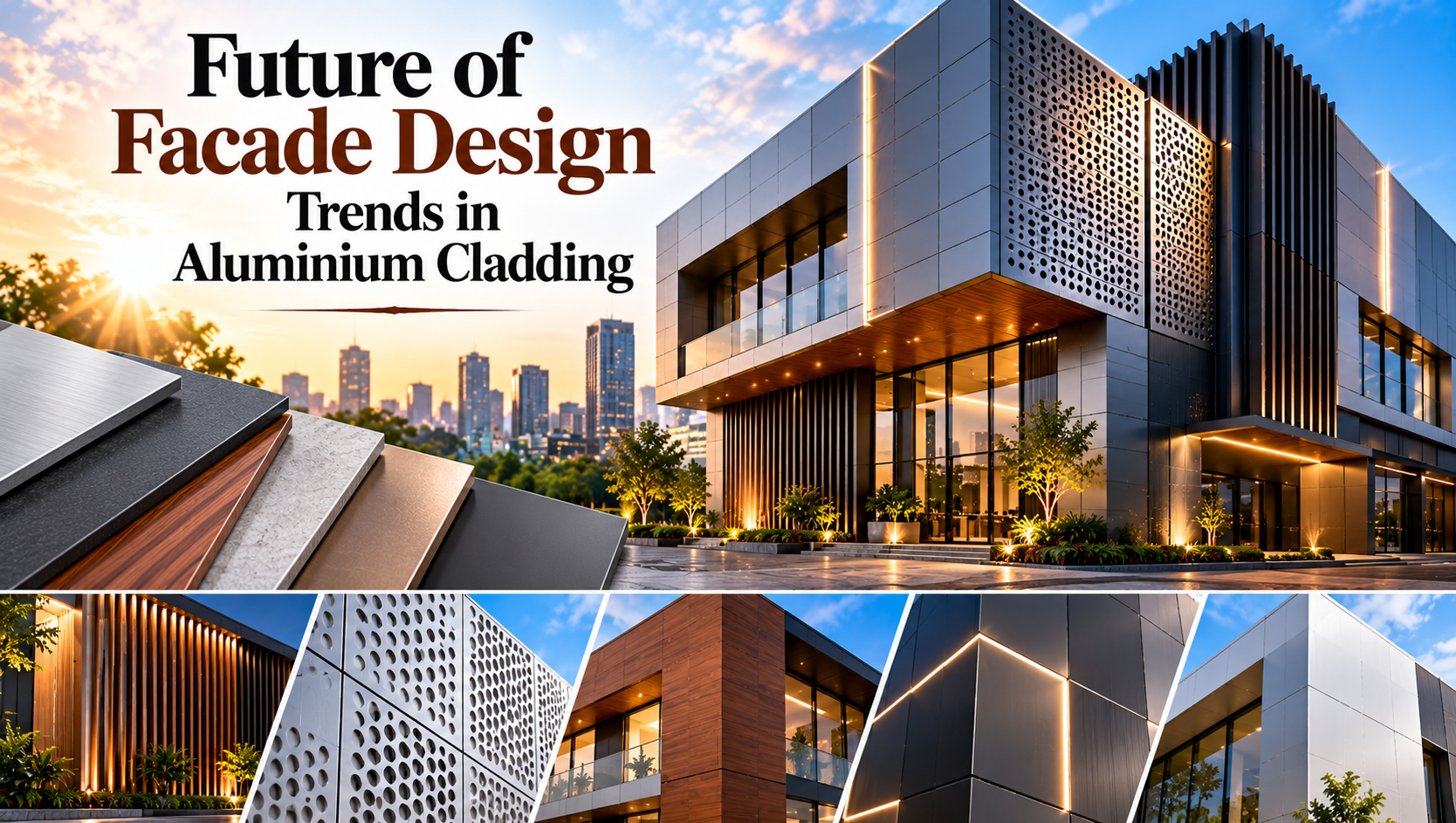
Facade design is evolving faster than ever. In 2026, modern architecture is no longer focused only on aesthetics — today’s façades are expected to deliver performance, sustainability, energy efficiency, fire safety, and intelligent design integration.
As cities grow smarter and buildings become more environmentally conscious, aluminium cladding has emerged as one of the most preferred façade materials for architects and developers worldwide. From commercial towers and luxury residences to airports and retail spaces, aluminium cladding systems are shaping the future of modern architecture.
With advanced finishes, lightweight construction, flexible fabrication, and high-performance coatings, aluminium cladding continues to redefine what building exteriors can achieve.
In this guide, we explore the top 11 aluminium cladding trends that are expected to dominate façade design in 2026.
1. Parametric & 3D Facade Designs
One of the biggest trends in 2026 is the rise of parametric façade architecture. Architects are increasingly using computational design and digital fabrication to create complex geometric façades with flowing shapes, folds, perforations, and 3D surfaces.
Aluminium cladding works exceptionally well for parametric architecture because it is lightweight, flexible, and easy to fabricate into custom forms.
Examples include:
- Curved façade panels
- Folded ACP elevations
- Dynamic shadow patterns
- Perforated metal skins
Modern commercial buildings now use parametric aluminium façades to create iconic architectural identities.
2. Sustainable & Recyclable Cladding Materials
Sustainability is no longer optional in architecture. In 2026, builders and architects are prioritizing recyclable and low-carbon façade materials.
Aluminium is highly recyclable, making aluminium cladding one of the most sustainable exterior solutions available today.
Key sustainability trends include:
- Recycled aluminium usage
- Low-carbon manufacturing
- Long-life façade systems
- Circular construction materials
- Eco-friendly coatings
Green building certifications increasingly favor sustainable aluminium façade systems.
3. Smart & Responsive Facades
Modern façades are becoming smarter and more adaptive. Smart façade systems can now respond to sunlight, temperature, and environmental conditions in real time.
Advanced aluminium cladding systems are being integrated with:
- Automated louvers
- Sensor-based controls
- Climate-responsive shading
- Ventilation systems
- Intelligent building technologies
These smart façades improve energy efficiency and occupant comfort while reducing operational costs.
4. Fire-Rated Aluminium Cladding
Fire safety is becoming one of the most important priorities in façade engineering. As regulations tighten globally, demand for fire-retardant aluminium cladding systems is increasing rapidly.
Modern projects increasingly specify:
- A2-grade ACP panels
- B1-grade fire-retardant cladding
- Certified façade systems
- Low-smoke materials
High-rise buildings, airports, hospitals, and commercial spaces now prioritize fire-safe aluminium cladding systems.
5. Mixed-Material Facades
Architects are moving away from plain single-material exteriors and embracing mixed-material façades.
Aluminium cladding is now commonly combined with:
- Glass
- Stone
- Terracotta
- Timber textures
- Concrete finishes
- Green walls
This creates visually rich and layered building exteriors with better texture and depth.
6. Timber-Look Aluminium Cladding
Natural aesthetics are becoming increasingly popular in modern architecture. However, real wood often requires high maintenance and can be vulnerable to weather damage.
As a result, timber-look aluminium cladding is becoming a major trend in 2026.
These cladding systems replicate natural wooden textures while offering:
- Better durability
- Moisture resistance
- UV protection
- Lower maintenance
- Long-term colour retention
Wood-finish ACP sheets are widely used in luxury residences, hotels, cafés, and modern commercial projects.
7. Ventilated & Rainscreen Facade Systems
Energy-efficient building envelopes are becoming essential in modern construction. Ventilated façades and rainscreen systems are increasingly being adopted for better thermal performance.
These systems improve:
- Air circulation
- Moisture control
- Insulation
- Energy efficiency
- Building durability
Aluminium cladding panels are ideal for ventilated façade systems because of their lightweight structure and installation flexibility.
8. Self-Cleaning & Low-Maintenance Surfaces
Building owners now seek façade systems that require less maintenance and cleaning. Modern aluminium cladding panels are being developed with advanced surface technologies.
Emerging surface innovations include:
- Nano-coated panels
- Anti-dust finishes
- Scratch-resistant coatings
- Anti-bacterial surfaces
- Self-cleaning technologies
These solutions are especially useful for:
- High-rise buildings
- Airports
- Hospitals
- Commercial towers
9. Bold Colours & Metallic Finishes
Minimalist architecture is evolving with more expressive façade colours and premium metallic finishes. In 2026, aluminium cladding trends include:
- Matte black facades
- Bronze metallic finishes
- Copper-inspired ACP
- Zinc textures
- Champagne gold tones
- Deep earthy palettes
Architects are increasingly using colour and texture to create distinctive building identities.
10. Energy-Generating Facades (BIPV Integration)
One of the most futuristic trends in aluminium cladding is the integration of renewable energy systems into façades. Building-Integrated Photovoltaics (BIPV) are transforming building exteriors into energy-generating surfaces.
Modern façades can now:
- Generate electricity
- Reduce energy dependency
- Improve sustainability performance
- Support green infrastructure goals
This trend is expected to grow rapidly in commercial and institutional architecture.
11. AI-Driven & Digitally Fabricated Facades
Artificial Intelligence and digital fabrication are beginning to influence façade design workflows. Architects now use AI-driven software and BIM systems to create smarter and more optimized façade structures. (.)
Modern technologies now support:
- Precision fabrication
- Faster prototyping
- Custom façade generation
- Automated detailing
- Smart performance analysis
This is allowing aluminium cladding systems to become more innovative and technically advanced.
Why Aluminium Cladding Is Dominating Modern Architecture
Aluminium cladding continues to lead modern façade design because it offers the perfect combination of:
- Lightweight performance
- Durability
- Design flexibility
- Sustainability
- Fire resistance
- Fast installation
- Low maintenance
- Premium aesthetics
Unlike traditional façade materials, aluminium cladding adapts easily to evolving architectural trends and smart building technologies.
How ACP Panels Fit into the Future of Facade Design
ACP sheets are becoming one of the most important materials in future-ready façade systems.
Modern ACP panels support:
- Parametric designs
- Curved surfaces
- Fire-rated façades
- Smart integration
- Sustainable construction
- Energy-efficient building envelopes
Manufacturers like Pioneer Panels are contributing to the future of architecture by developing advanced ACP solutions engineered for modern design freedom, long-term durability, and high-performance façade systems.
Conclusion
The future of façade design is moving toward smarter, safer, and more sustainable building envelopes. Aluminium cladding stands at the center of this transformation because it combines modern aesthetics with performance-driven engineering.
From parametric façades and smart skins to fire-rated systems and energy-generating exteriors, aluminium cladding is redefining the way buildings look and perform in 2026.
As architecture continues to evolve, aluminium cladding will remain one of the most versatile and future-ready façade solutions for commercial, residential, and public infrastructure projects.
FAQs
1. Why is aluminium cladding popular in modern architecture?
Aluminium cladding is lightweight, durable, sustainable, low-maintenance, and offers excellent design flexibility for modern façade systems.
2. What are the biggest façade design trends in 2026?
Key trends include parametric façades, smart cladding systems, sustainable materials, timber-look finishes, and fire-rated ACP panels.
3. Are aluminium cladding systems sustainable?
Yes, aluminium is highly recyclable and supports sustainable and low-carbon construction practices.
4. What is a smart façade system?
A smart façade uses responsive technologies like sensors, automated shading, and ventilation systems to improve building performance.
5. Why are fire-rated ACP panels important in 2026?
Fire-rated ACP panels improve building safety, reduce flame spread, and help projects comply with modern fire safety regulations.