
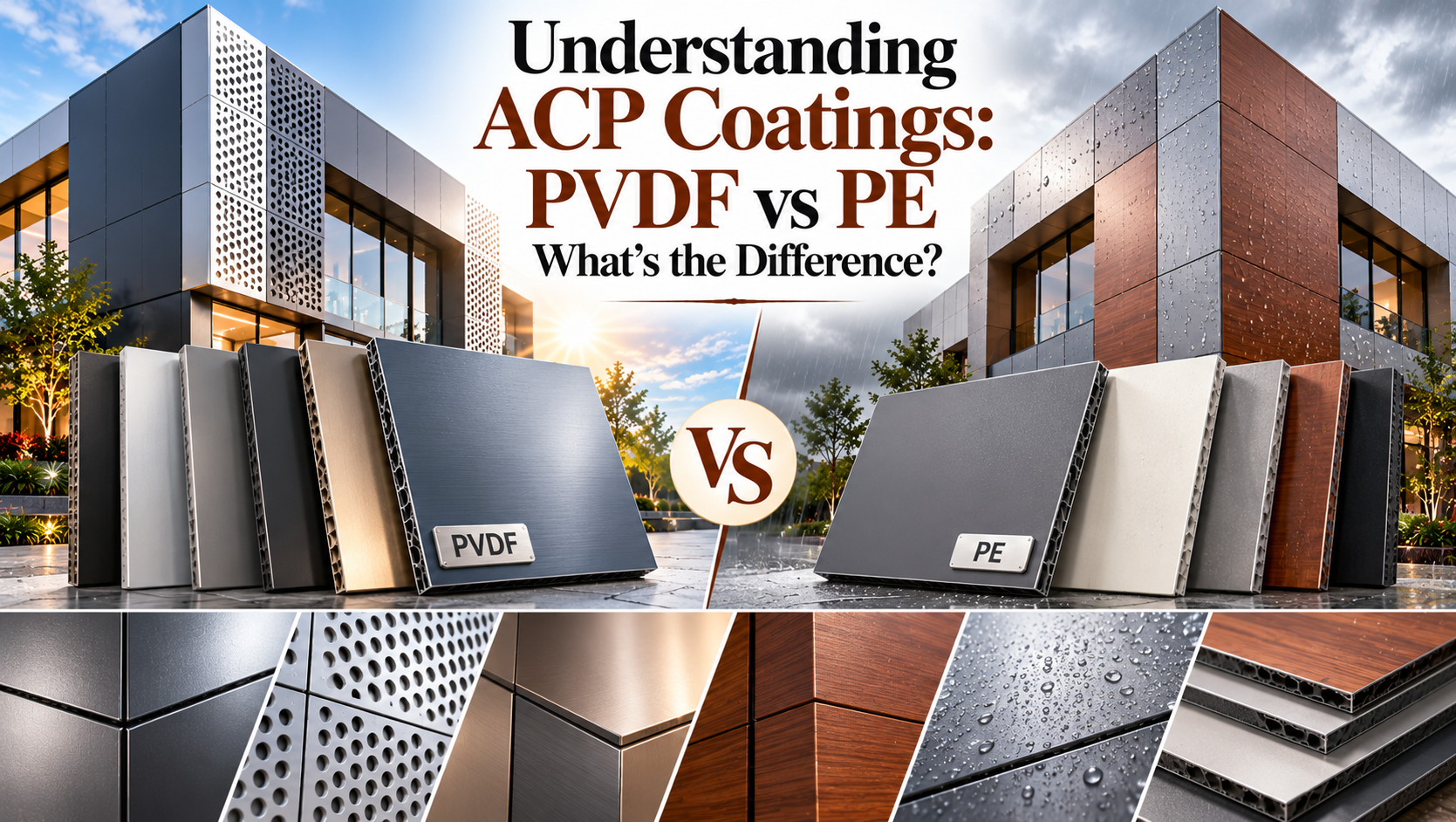
Aluminium Composite Panels (ACP) have become one of the most preferred materials in modern architecture and construction. From commercial façades and residential elevations to signage and interior applications, ACP sheets are widely used because of their durability, lightweight structure, and modern appearance.
However, one of the most important factors that determines the performance and lifespan of ACP sheets is the type of coating used on the surface. Two of the most commonly used ACP coatings are PVDF and PE coatings.
While both coatings are designed to protect ACP panels and enhance aesthetics, they differ significantly in terms of durability, weather resistance, applications, cost, and long-term performance.
Choosing the right ACP coating is essential for architects, builders, fabricators, and property owners because it directly affects the panel’s appearance, maintenance, and lifespan.
In this guide, we’ll explain everything about PVDF vs PE ACP coatings, their differences, advantages, applications, and which option is better for your project.
What Are ACP Coatings?
ACP coatings are protective and decorative layers applied to the aluminium surface of ACP sheets. These coatings improve:
- Weather resistance
- UV protection
- Colour retention
- Surface durability
- Corrosion resistance
- Visual appearance
The coating acts as a shield that protects ACP panels from environmental damage such as sunlight, moisture, pollution, and temperature changes.
Without proper coatings, ACP sheets may fade, corrode, or lose their appearance over time.
The two most common ACP coating systems are:
- PVDF Coating
- PE Coating
Let’s understand both in detail.
What Is PVDF Coating?
PVDF stands for Polyvinylidene Fluoride. It is a high-performance fluoropolymer coating widely used in exterior architectural applications.
PVDF coatings are known for their exceptional durability, UV resistance, and weather protection.
These coatings usually contain:
- Fluorocarbon resin
- High-performance pigments
- Advanced protective layers
PVDF-coated ACP sheets are specifically designed for exterior applications where panels are exposed to harsh weather conditions.
Key Features of PVDF ACP Sheets
Excellent Weather Resistance
PVDF coatings can withstand:
- Heavy rain
- UV radiation
- Humidity
- Pollution
- Extreme temperatures
This makes them ideal for outdoor applications.
Superior Colour Retention
PVDF coatings maintain colour consistency for many years without fading.
Buildings exposed to strong sunlight benefit greatly from PVDF-coated panels.
High Durability
These coatings offer long-term structural and surface protection.
Corrosion Resistance
PVDF coatings help protect ACP panels from moisture and environmental corrosion.
Low Maintenance
PVDF ACP sheets require minimal cleaning and maintenance over time.
Applications of PVDF ACP Sheets
PVDF ACP panels are mainly used for exterior applications such as:
- Building façades
- High-rise elevations
- Commercial buildings
- Airports
- Metro stations
- Shopping malls
- Hotels
- Petrol pumps
- Exterior cladding systems
Architects prefer PVDF ACP sheets for projects requiring long-term exterior durability.
What Is PE Coating?
PE stands for Polyester Coating. PE-coated ACP sheets use polyester paint systems designed mainly for interior applications.
These coatings provide good decorative finishes at a more economical cost compared to PVDF coatings.
PE coatings offer:
- Smooth appearance
- Decorative flexibility
- Cost efficiency
- Basic surface protection
However, PE coatings are not designed for long-term exposure to harsh outdoor environments.
Key Features of PE ACP Sheets
Cost-Effective Solution
PE ACP sheets are more affordable than PVDF panels.
This makes them suitable for budget-friendly projects.
Good Decorative Finish
PE coatings provide attractive colours and glossy surfaces.
Suitable for Interior Use
These panels perform well in indoor environments with limited weather exposure.
Lightweight and Easy to Fabricate
PE ACP sheets are easy to cut, bend, and install.
Applications of PE ACP Sheets
PE ACP panels are commonly used for:
- Interior wall cladding
- False ceilings
- Partitions
- Exhibition panels
- Signage
- Retail interiors
- Decorative applications
They are ideal for indoor projects where UV and weather exposure are minimal.
PVDF vs PE ACP Coating: Key Differences
Understanding the difference between PVDF and PE coatings helps in selecting the right ACP sheet for your project.
| Feature | PVDF Coating | PE Coating |
| Full Form | Polyvinylidene Fluoride | Polyester |
| Main Application | Exterior | Interior |
| Weather Resistance | Excellent | Moderate |
| UV Protection | High | Limited |
| Colour Retention | Long-lasting | May fade over time |
| Durability | Very high | Moderate |
| Corrosion Resistance | Excellent | Basic |
| Cost | Higher | More affordable |
| Maintenance | Low | Moderate |
| Lifespan | Longer | Shorter |
Which ACP Coating Is Better for Exterior Applications?
For exterior applications, PVDF-coated ACP sheets are considered the better choice.
Exterior façades are constantly exposed to:
- Sunlight
- Rain
- Pollution
- Heat
- Moisture
PVDF coatings are specially designed to handle these conditions without fading or deteriorating quickly.
This is why most commercial buildings, airports, malls, and modern façades use PVDF ACP panels.
Which ACP Coating Is Better for Interior Applications?
For interiors, PE-coated ACP sheets are often sufficient.
Indoor environments have:
- Less UV exposure
- Controlled temperatures
- Lower moisture exposure
This makes PE ACP sheets a practical and economical choice for:
- Decorative interiors
- Retail spaces
- Office interiors
- Ceiling applications
How Climate Affects ACP Coating Selection
Climate plays a major role when selecting ACP coatings.
Hot & Humid Regions
PVDF ACP sheets are ideal because they resist:
- Moisture
- UV damage
- Heat exposure
Coastal Areas
PVDF coatings provide better corrosion resistance against salty air.
Indoor Controlled Environments
PE ACP sheets work effectively in interior environments without direct weather exposure.
Importance of UV Resistance in ACP Sheets
One of the biggest advantages of PVDF coatings is superior UV resistance.
Poor-quality ACP coatings may:
- Fade quickly
- Lose gloss
- Crack over time
PVDF coatings maintain their appearance for years, even under strong sunlight.
This makes them a preferred option for modern exterior architecture.
Maintenance Comparison
PVDF ACP Sheets
- Easy to clean
- Resistant to stains
- Lower maintenance costs
- Long-lasting finish
PE ACP Sheets
- Require more care over time
- More prone to fading in outdoor conditions
- Better suited for protected interiors
Cost Comparison: PVDF vs PE
PE ACP sheets are generally cheaper than PVDF ACP sheets.
However, long-term value should also be considered.
While PVDF panels have a higher initial cost, they often provide:
- Longer lifespan
- Reduced maintenance
- Better appearance retention
- Improved exterior durability
For outdoor projects, PVDF can be more cost-effective over the long term.
How to Choose the Right ACP Coating
Before selecting ACP panels, consider the following:
Project Location
Exterior projects require PVDF coatings.
Environmental Exposure
Buildings exposed to sunlight, rain, or pollution need stronger coating systems.
Budget
PE coatings are suitable for economical interior projects.
Lifespan Expectations
Long-term exterior projects benefit from PVDF durability.
Aesthetic Requirements
Both coatings are available in multiple colours, textures, and finishes.
Why Architects Prefer PVDF ACP for Modern Facades
Modern architects increasingly choose PVDF ACP sheets because they offer:
- Long-term performance
- Premium appearance
- Better weather protection
- Modern aesthetics
- Lower maintenance
- Enhanced durability
With urban infrastructure expanding rapidly, durable façade materials are becoming more important than ever.
The Future of ACP Coating Technology
ACP coating technology continues to evolve with advancements in:
- UV-resistant coatings
- Self-cleaning surfaces
- Eco-friendly paints
- Nano-coating technology
- Improved fire safety performance
Manufacturers are now developing ACP sheets that combine:
- Aesthetics
- Sustainability
- Durability
- Safety
Brands like Pioneer Panels are contributing to modern architectural innovation by offering high-performance ACP solutions designed for both interior and exterior applications.
Conclusion
Both PVDF and PE ACP coatings have their own advantages and ideal applications.
PVDF-coated ACP sheets are best suited for exterior projects requiring:
- Weather resistance
- UV protection
- Long-term durability
- Premium façade performance
PE-coated ACP sheets are ideal for:
- Interior decoration
- Cost-effective applications
- Decorative indoor environments
Choosing the right ACP coating depends on your project location, budget, environmental exposure, and durability expectations.
Understanding these differences helps architects, builders, and property owners make smarter façade decisions for modern construction projects.
FAQs
1. What is the difference between PVDF and PE ACP sheets?
PVDF ACP sheets are designed for exterior applications with high weather resistance, while PE ACP sheets are mainly used for interior decorative applications.
2. Which ACP coating is better for outdoor use?
PVDF coating is better for outdoor use because it offers superior UV resistance, weather protection, and durability.
3. Are PE ACP sheets suitable for exterior applications?
PE ACP sheets are generally recommended for interiors because prolonged outdoor exposure may cause fading and reduced durability.
4. Why are PVDF ACP sheets more expensive?
PVDF coatings use advanced fluoropolymer technology that provides better protection, longer lifespan, and improved weather resistance.
5. Which ACP sheet requires less maintenance?
PVDF ACP sheets require less maintenance because they resist fading, staining, and environmental damage more effectively.